 Skip to content

- When Is The Best Time To Visit The Great Lakes Without The Summer Crowds?
September through early October is your absolute sweet spot. The summer cottage crowds have vanished after Labor Day, but the lake waters remain warm from months of summer sun—often staying swimmable through September in Lake Michigan and Lake Erie. You get the beach experience without the peak-season price surge.
The fall colors reflecting off the lake surfaces create a photographer's dream, and charming harbor towns like Traverse City, Saugatuck, and Door County offer empty sidewalks and firepit-ready lodging discounts. For real-time lake conditions and seasonal beach alerts, bookmark the National Weather Service Great Lakes office. For month-by-month timing across the region, visit our Off-Season Calendar.
- Is The Midwest Worth Visiting During The Cold Winter Months?
Absolutely, if you embrace the "Smart Travel" mindset of dressing properly and chasing indoor adventures. January and February deliver the lowest hotel rates of the entire year across Chicago, Minneapolis, Cleveland, and Milwaukee—often 50-60% below summer peaks. You get world-class museums, live music venues, and indoor water parks with zero wait times.
The secret is to use the cold as your crowd repellent. Walk through Chicago's Pedway system (underground tunnels connecting 40+ blocks), explore the Mall of America in Bloomington without fighting for parking, or visit the Henry Ford Museum in Dearborn on a snowy Tuesday when you will practically have the place to yourself. For current winter road conditions and weather alerts across the Great Lakes region, the Michigan Department of Transportation provides reliable real-time updates.
- What Is The Cheapest Month To Explore Michigan's Pictured Rocks Or Wisconsin's Apostle Islands?
May and October are your answers, depending on your temperature preference. May offers the spring shoulder season: the ice has melted, waterfalls are roaring with snowmelt, but the summer ferry schedules haven't started their premium pricing. You can kayak near the Pictured Rocks sea caves with significantly fewer boat traffic and lodge rates at half price.
October brings dramatic storm watching on Lake Superior's shores, turning the painted cliffs into a moody masterpiece. The Apostle Islands sea caves are best viewed from water-level kayaks in October when the crowds vanish and the autumn light creates magic. For official park seasonal hours, backcountry camping permits, and water trail conditions, the National Park Service page for Pictured Rocks and Apostle Islands National Lakeshore is your essential pre-trip resource.
- Does The Midwest Have A Secret Season For Island Hopping?
Yes, and it is June for ferry deals and September for solitude. Lake Erie islands like Put-in-Bay and Kelley's Island, Michigan's Mackinac Island, and Wisconsin's Madeline Island see their peak crowds from July 4th through mid-August. Visit in early June, and you get the blooming flowers, open attractions, and ferry tickets that cost nearly half of what they charge weeks later.
September is even better for adults seeking serenity: the summer families have gone home, but the weather remains mild, and island bike rentals drop to their lowest prices of the year. Mackinac Island's famous Grand Hotel offers "Secret Season" packages in September starting at one-third of July rates. For ferry schedules, seasonal pricing, and island event calendars, the U.S. Army Corps of Engineers Great Lakes recreation page provides helpful navigation and access information.
- How Do The Great Lakes Create Their Own Unique Off-Seasons?
Fascinatingly, the Great Lakes act as massive heat batteries that create "lake effect" microclimates you can strategically exploit. In autumn (October-November) , the lakes release stored summer heat, keeping shoreline towns warmer than inland areas for weeks—perfect for extending the fall foliage season along Lake Michigan's Gold Coast.
In spring (April-May) , the opposite happens: the cold lake water keeps coastal areas cooler than inland, which means you can ski at Michigan's Upper Peninsula resorts while Ohioans are planting gardens just a few hours south. This 300-mile north-south stretch gives you incredible seasonal variety. The smart traveler can drive from frozen waterfalls in Minnesota's North Shore (March) to blooming dogwoods in Missouri's Ozarks (April) in a single day. For lake temperature data, ice cover reports, and seasonal fishing forecasts, the NOAA Great Lakes Environmental Research Laboratory is your authoritative scientific resource. For deeper regional breakdowns on timing each Great Lake state perfectly, explore our United States country guide or use our AI Travel Assistant to build your custom Midwest itinerary.

Home > Exploit The Seasons > Seasonal World Map > North America > United States > U.S. Midwest And Great Lakes
MIDWEST & GREAT LAKES
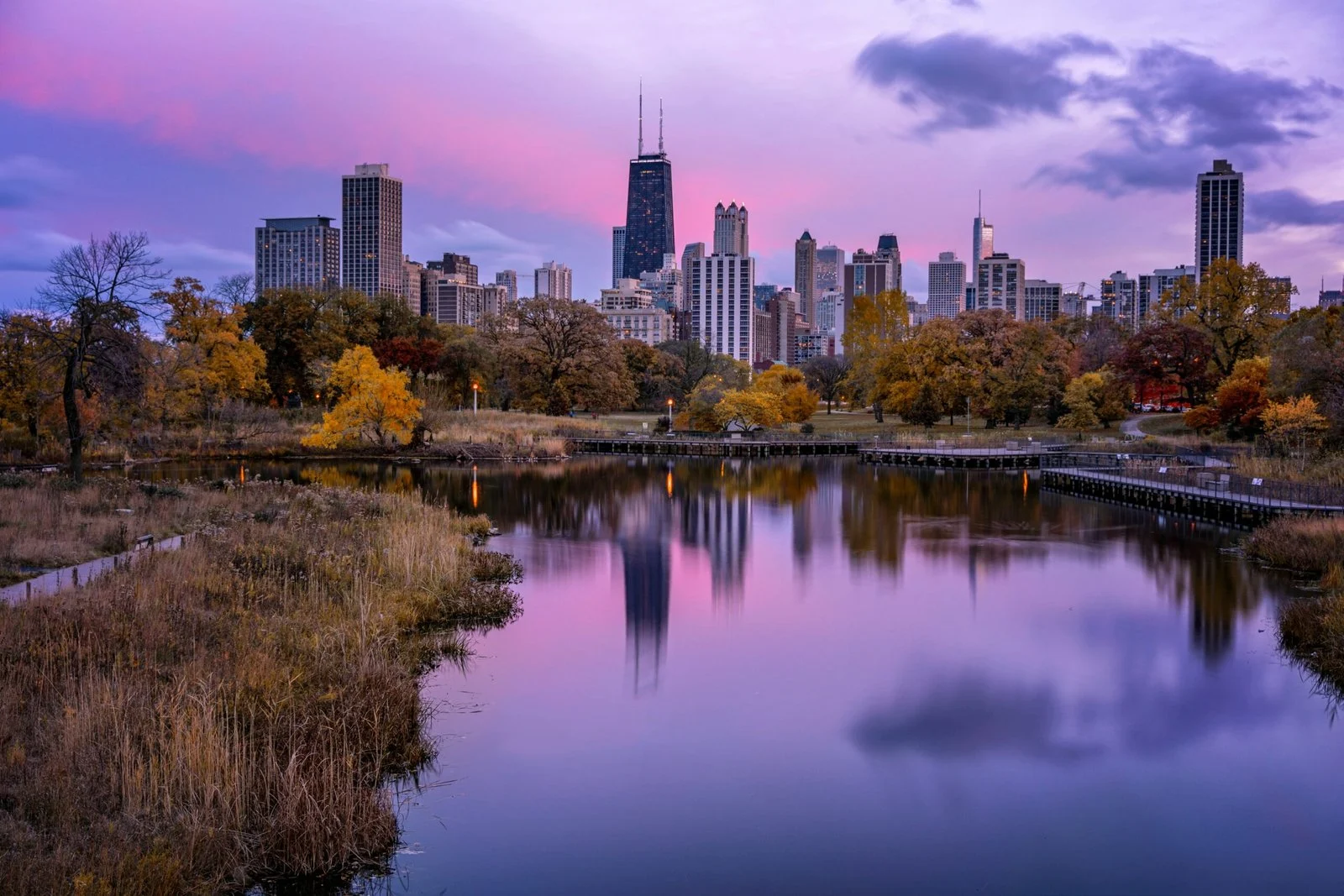
The Great Lakes reveal their wild beauty when summer crowds fade and winter’s ice sculptures arrive. Walk Lake Michigan beaches alone, find Chicago hotel deals under $100, and discover why Midwesterners say “you just need the right coat.”
Smart Travel Calendar
Shoulder Season
Your Smartest Windows
Late May to mid-June (post-Memorial Day, pre-summer — lilacs, cherries blooming, Lake Superior still cold but lower peninsula warm)
September (post-Labor Day) to mid-October (summer crowds gone, fall colors beginning — especially Upper Peninsula and Wisconsin)
Avoid: Summer weekends (July-August on Great Lakes beaches); Memorial Day weekend (Chicago to Michigan traffic nightmare); Labor Day weekend (same); Fourth of July week (everywhere busy); and Thanksgiving week (Chicago & Detroit family travel)
What the Sky Does
Late May-mid June: 12-26°C (54-78°F) — comfortable; occasional thunderstorms; Lake Michigan water temps 10-15°C (50-59°F) — brisk but swimmable for hardy souls
September-mid October: 8-23°C (46-73°F) — crisp mornings, warm afternoons; lower humidity than summer; peak fall colors typically late September in Upper Peninsula, mid-October in lower Midwest
Late May brings lilac festivals (Mackinac Island, Rochester NY but also Midwest lilacs) and cherry blossoms (Traverse City)
September offers the most reliable weather — no summer humidity, no winter cold, Lake Michigan still warm from summer
How Empty It Feels
40-60% fewer tourists vs. summer peak (July-August) or fall color peak (early October)
Sleeping Bear Dunes (MI) — Pierce Stocking Scenic Drive has parking; climb the dunes without dodging 100 people
Mackinac Island — ferry boats half-full; Main Street’s fudge shops have elbow room; bike rentals available instantly
Door County (WI) — Peninsula State Park roads quiet; Fish boils without hour-long waits
Chicago’s Navy Pier & Millennium Park — take a photo at The Bean without photobombers; walk onto Ferris wheel
Upper Peninsula’s Pictured Rocks — boat tours less crowded; hiking trails along Lake Superior nearly empty
What You’ll Save
Hotels: 35-55% off summer peak — Chicago River North for $120-150/night; Mackinac Island for $150; Traverse City for $120
Flights to Chicago (ORD/MDW), Detroit (DTW), Minneapolis (MSP), Milwaukee (MKE): 30-50% off summer rates
Car rentals — 40-60% off summer weekends (Chicago to Michigan route especially)
Ferry tickets to Mackinac Island — no surge pricing; available day-of
Brewery tours and wine tastings — Michigan wine country (Traverse City, Leelanau Peninsula) uncrowded
The Secret Perk
Late May’s lilac festival on Mackinac Island — 150-year-old lilac bushes in full bloom, parade, and far fewer crowds than July
June’s cherry blossom in Traverse City — Orchards blooming (early June); less famous than Washington DC but just as beautiful
September’s harvest season — Apples (Honeycrisp ready early September), pumpkins, and fall crops; cider mills open without October crowds
Late September’s Upper Peninsula colors — Porcupine Mountains, Pictured Rocks, and Tahquamenon Falls in early fall colors before peak crowds
Lake Michigan swimming in September — water is actually warmer in September (20-23°C/68-73°F) than June (12-15°C/54-59°F) due to thermal lag
Photography perfection — September’s golden hour over dunes and lighthouses; no summer haze; dramatic storm clouds possible
Local festivals — September’s Oktoberfest celebrations (Cincinnati, Milwaukee, Chicago); October’s harvest festivals without fall color traffic
The Tiny Trade-Off
Lake Superior is always cold — even in September, water temps 10-15°C (50-59°F); swimming is brief and requires courage
May weather is unpredictable — could be 26°C (78°F) or 8°C (46°F) with rain; pack layers
Upper Peninsula color timing varies — peak can be late September or early October depending on elevation and weather; easy to mis-time
Some coastal restaurants close in September — especially in smaller lake towns (South Haven, Saugatuck, Charlevoix) — some close after Labor Day, others stay open weekends only
Ferry schedules reduce in October — Mackinac Island ferries run but less frequent after mid-October; island hotels start closing for season
Smart Traveler Tip
Best balance window: First two weeks of September (post-Labor Day, pre-fall colors; Lake Michigan still warm; kids back in school; no crowds)
For spring: First two weeks of June (avoid Memorial Day weekend traffic; lilacs and cherries blooming; everything open for summer but crowds not yet arrived)
For fall colors without crowds: Go late September in Upper Peninsula (Porcupine Mountains, Keweenaw Peninsula) or early October in Lower Peninsula/Wisconsin — weekdays only; weekends still busy
Avoid driving from Chicago to Michigan on Friday afternoons in summer — I-94 becomes a parking lot. Go Thursday or Saturday morning instead.
Book September travel by mid-August — hotels still reasonable but fill for Labor Day
Deep Off-Season
Your Smartest Windows
January through February (post-holiday, pre-spring — coldest months, but emptiest and cheapest)
March (post-ski season) through mid-April (“mud season” — true off-season; snow melts, lake ice breaks up)
Late October through mid-November (post-fall colors, pre-Thanksgiving — “stick season”)
Early December (first two weeks) (pre-Christmas, pre-holiday travel — decorations up, Chicago Christkindlmarket open)
Avoid: Christmas through New Year’s (peak pricing in Chicago and ski hills); President’s Day week (mid-February — Upper Peninsula and Wisconsin ski areas busy); Thanksgiving week (Chicago and Detroit family travel); and summer lake weekends (July-August)
What the Sky Does
January-February: -12°C to -2°C (10-28°F) — colder in northern areas (Minneapolis, Upper Peninsula, Lake Superior); lake-effect snow in snow belts (Michigan’s west coast, Ohio’s snow belt, Erie, PA)
March-mid April: -3°C to 12°C (26-54°F) — snow melting; mud; occasional late-season snowstorm (“second winter”)
Late October-mid November: -1°C to 13°C (30-55°F) — gray/brown landscapes; first snow dustings possible; cold rain common
Early December: -7°C to 3°C (19-37°F) — cold; lake-effect snow starting; holiday lights everywhere
Great Lakes ice cover — lakes freeze partially (some years completely) January-March; dramatic ice formations on lighthouses and shores
How Empty It Feels
January-February: 75-85% fewer tourists vs. summer peak — Great Lakes coastal towns are ghost towns
March-April: 80-90% fewer tourists — mud season; ski resorts closing, summer not started
Late October-November: 85-90% fewer tourists — “secret season” locals love
Chicago — Magnificent Mile has space to walk; Art Institute of Chicago uncrowded; restaurant reservations easy
Mackinac Island — island mostly closed (most hotels/restaurants shut November-March); but the quiet is profound
Door County — Peninsula State Park roads empty; fish boils and galleries closed; winter hiking and cross-country skiing available
Sleeping Bear Dunes — climb the dunes in complete solitude; only sound is wind off Lake Michigan
Pictured Rocks National Lakeshore — winter ice formations on cliffs; snowshoeing and cross-country skiing without another soul
What You’ll Save
Hotels: 70-85% off summer peak — Chicago luxury hotels for $80-100/night; Traverse City for $60; Mackinac Island (if open) for $70
Flights to Chicago, Detroit, Minneapolis, Milwaukee: 60-80% off summer/holiday rates
Car rentals under $20/day — sometimes $15/day in January
Lake Michigan beachfront hotels — South Haven, Saugatuck, Charlevoix, Bay Harbor: rooms that were $400 in July are $89 in February
Chicago theater and shows — deep discounts at Broadway in Chicago, Second City, and Lyric Opera (slow season)
Breweries and distilleries — no wait at popular spots like Revolution Brewing (Chicago), Founders (Grand Rapids), New Glarus (Wisconsin)
The Secret Perk
January: “Lake effect” winter photography — ice-covered lighthouses (St. Joseph, South Haven, Grand Haven, Marquette), frozen waterfalls (Minnehaha Falls MN, Tahquamenon Falls MI), hoarfrost on trees
February: Ice caves and formations — Apostle Islands (Wisconsin) ice caves (when Lake Superior freezes enough to walk); Mackinac Bridge ice formations
March: Maple syrup season — sugarhouses across Michigan, Wisconsin, Minnesota, and Ohio open for tours; fresh syrup on fresh snow (“sugar on snow”)
Late October: “Secret season” in Chicago — hotels at 70% off, perfect museum weather (Field Museum, Art Institute, Shedd Aquarium), no lines
December’s Christkindlmarket — Chicago’s German Christmas market (mid-November through December) without peak December 20-25 crowds (go early December)
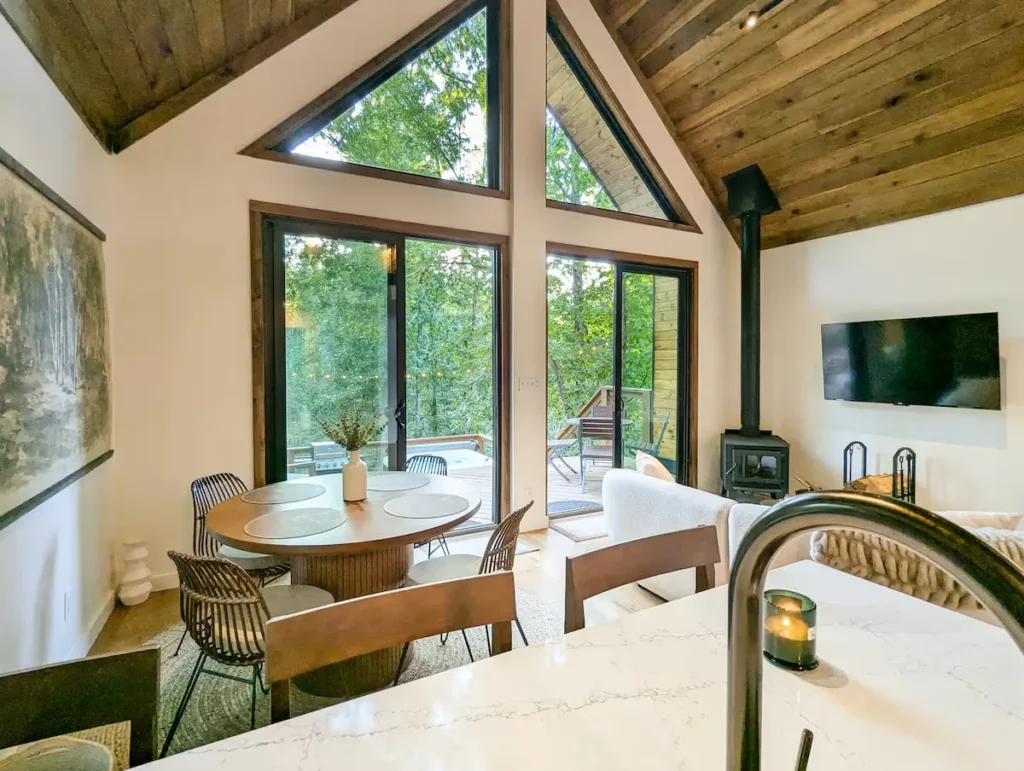
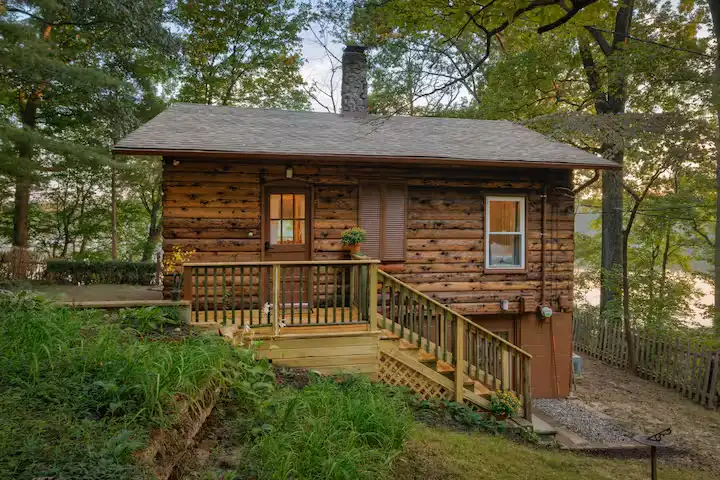
Cozy cabin season — Great Lakes cabins with fireplaces, wood-burning stoves, lake views frozen; read books, play board games, watch snow fall
Local interactions — bartenders, cheese mongers, and brewery staff have time to talk; they’ll tell you where locals actually go
Cross-country skiing and snowshoeing — trails in Porcupine Mountains, Kettle Moraine (WI), Cuyahoga Valley (OH), and state parks nationwide; empty and silent
The Tiny Trade-Off
January-February cold is serious — -20°C to -30°C (-4°F to -22°F) wind chills in Minnesota, Wisconsin, Upper Peninsula, and North Dakota (though ND is Great Plains). Pack extreme cold gear. Frostbite risk is real.
Lake-effect snow can close roads — I-94 in Michigan (west of Kalamazoo to Lake Michigan), I-90 in Ohio/PA, and US-2 in Upper Peninsula can see whiteout conditions
Mackinac Island is mostly closed (November-March) — only a handful of businesses open (Grand Hotel closed; ferry schedules limited or suspended)
Door County is sleepy — most restaurants and galleries close November-April; weekend winter hours limited
Mud season (March-April) trails are unusable — hiking trails are sloppy mud pits; respect trail closures
Daylight is very short — sunset 4:15-5:00pm in December/January
Some national lakeshore facilities close — Pictured Rocks, Sleeping Bear Dunes, and Apostle Islands visitor centers have reduced winter hours or close entirely
Great Lakes swimming is impossible — water temps near freezing; only for polar plunges
Smart Traveler Tip
Quietest, cheapest window: January (post-New Year’s through January 31) — hotels at 15-20% of summer rates; Chicago is a bargain; Great Lakes towns are yours alone. Pack serious winter gear.
For winter beauty without extreme cold: Head to Chicago, Detroit, Cleveland, or Indianapolis — still cold but less extreme than Upper Peninsula or Minnesota.
Best value for winter sports (skiing/snowboarding): Early December (1-15) OR late March — slopes open, holiday crowds not yet arrived (or already gone), lift tickets 40-60% off peak
“Secret season” recommendation: Late October through mid-November — no leaves, no snow, no crowds, but hotels at rock bottom; perfect for museums, breweries, and Chicago’s indoor attractions
For frozen lake photography: Late January through mid-February — peak ice formation on lighthouses; check local ice reports for safety
Packing for Midwest winter: Heavy down coat, insulated waterproof boots (snow/mud), wool socks, base layers, balaclava or face mask, gloves (not just mittens), hat. The prairie wind is brutal.
Mud season survival: Call ahead to confirm hotel/restaurant openings in coastal towns (many close for 2-4 weeks). Bring waterproof boots and accept that hiking trails are off-limits.
Pre-spring sweet spot: Late April to early May — still some deals, but spring finally arriving; avoid mid-March (mud) and late May (Memorial Day traffic)
Find Off-Peak Flights
Top Off‑Season Stays
Find below our curated selection of boutique hotels and design apartments that offer exceptional value, atmosphere, and comfort during the off‑season — often at significantly lower rates than peak months.
Uncrowded Experiences & Tours
Skip the lines and experience iconic landmarks at your own pace. Discover curated local tours and cultural activities designed to show you the authentic side of the destination without the peak-season rush.
Handy Tips
Weather & Climate
The Midwest has warm, humid summers and cold winters with snow—especially near the Great Lakes. Lake-effect weather can create sudden changes. The Plains experience hot summers, cold winters, and dramatic storms.
Local Customs And Etiquette
Friendliness: Midwesterners are known for being genuinely friendly and polite. A brief, casual conversation with strangers is common and encouraged.
Tipping: Standard US tipping customs apply: 15–20% for good service at sit-down restaurants.
Driving: People tend to drive more slowly and patiently than in the coastal regions. Road etiquette is generally courteous.
Budgeting For Your Trip
Accommodation: Hostels ($30–$60), mid-range hotels ($100–$180), luxury ($220+). Prices are significantly higher in downtown Chicago.
Food: Casual lunch ($10–$18), dinner at a mid-range restaurant ($30–$55 per person), fine dining ($70+).
Transport: Car rental ($40/day), city public transport ($2.50/ride).
Activities: Museum admission ($15–$30), boat tours ($40+), ski pass ($60–$100).
Daily Budget:
- Budget: $70–$110 (hostels, small plate food, public transport).
- Mid-range: $150–$250 (hotels, restaurants, attractions).
- Luxury: $280+ (boutique hotels, gourmet meals, private tours).
Getting Around
By Car: A car is essential for exploring the Plains States, the Upper Peninsula, and any of the rural areas or national parks.
By Air: Major hubs like Chicago (ORD) and Minneapolis (MSP) offer connections across the country.
By Public Transport: Chicago has an extensive ‘L’ train and bus system. Other cities, like Kansas City or Detroit, may require a car for full exploration.
Must-Try Food
Chicago Deep Dish Pizza: A buttery, tall-crusted pizza baked in a pan and layered with cheese and sauce.
Chicago-Style Hot Dog: An all-beef dog loaded with mustard, chopped white onions, bright sweet pickle relish, a dill pickle spear, tomato wedges, pickled sport peppers, and a dash of celery salt—no ketchup!
St. Louis Barbecue Ribs: Pork ribs smoked over indirect heat, often dry-rubbed or slathered in a sweet, tangy sauce.
Sauerbraten: A German-style pot roast, a staple of Midwestern heritage cooking.
Jucy Lucy (Minneapolis): A hamburger with the cheese cooked inside the patty, creating a molten center.
Runza: A yeast dough bread pocket filled with seasoned ground beef, cabbage or sauerkraut, and onions (especially in Nebraska).
Cheese Curds: Fried or fresh pieces of curdled milk, a Wisconsin specialty that squeaks when you bite them.
Buckeye: A peanut butter fudge ball dipped in chocolate, leaving a small circle of peanut butter visible (like the nut of the Buckeye tree).
Kringle (Wisconsin/Danish): A large, oval-shaped flaky pastry, typically filled with fruit, nuts, or cheese.
Gooey Butter Cake (St. Louis): A dense, flat cake baked with a butter-and-sugar crust and a creamy, sticky filling.
Must-Try Drinks
Midwestern Craft Beer: This region is a major hub for craft brewing, with breweries specializing in everything from IPAs to German-style lagers.
Old Fashioned (Wisconsin Style): A classic cocktail that is often made with brandy instead of whiskey and topped with lemon-lime soda.
Grape Soda (Pop): In this region, carbonated beverages are typically called “pop” instead of “soda.”
Wines from the Great Lakes Region: Cold-climate wines, including Riesling, Gewürztraminer, and various fruit wines.
Hard Cider: Cideries are popular, especially in Michigan, using the abundant local apples.
Hot Cocoa: A winter favorite, often served after outdoor activities or with a shot of peppermint schnapps for adults.