 Skip to content

- Is The Weather Really That Bad During Bali’s Off-Season Or Is It Still Enjoyable?
No, it is absolutely still enjoyable, just different. The off-season in Bali means tropical downpours that usually arrive as short, dramatic afternoon bursts rather than non-stop grey skies. You will wake up to sunny mornings perfect for temple visits, then watch a spectacular storm roll in while you enjoy a cheap massage.
The drawdown is that humidity climbs higher, so you will feel like you are walking through a warm cloud. But the trade-off is the island transforms into an impossibly lush, neon-green paradise that dry season travelers never see. To truly “Exploit Travel Seasonality,” pack a light poncho and plan outdoor adventures for mornings only.
- How Much Can I Really Save On Hotels And Villas During Shoulder And Low Season?
You can save between 30% and 50% on accommodation, which is a massive win for smart travelers. Luxury villas that cost a fortune in July drop to nearly half their peak rates from November through March, and even shoulder months like April or October offer discounts around 20% to 30%.
The drawdown is that a few high-end resorts might close a wing for maintenance or have fewer restaurant options open. However, you will often get upgraded to a better room simply because hotels have availability. You will essentially pay mid-range prices for five-star experiences, which is the core Volomundi promise.
- Will I Be Stuck Inside All Day Or Can I Still Visit Beaches And Temples?
You will still enjoy plenty of beach time and temple visits, just with better planning. Most rainy season days start with clear skies, allowing you to hit popular spots like Uluwatu Temple or Seminyak Beach before lunch. The afternoon showers typically last one to two hours, after which the sun often returns.
The drawdown is that swimming can feel choppier, and some remote coastal roads get muddy. But you gain nearly empty beaches and waterfalls that roar with power instead of trickling. You can stand at Tanah Lot during sunset without fighting two hundred tourists for a photo, which is priceless.
- Is The Off-Season A Good Time For Surfers Or Only For Budget Travelers?
Yes, it is actually an excellent time for experienced surfers seeking bigger challenges. The wet season from November to March brings consistent west coast swells that create world-class barrels at famous breaks like Padang Padang and Uluwatu. Beginners should stick to the dry season gentler waves.
The drawdown for non-surfers is that some beach clubs close or operate on limited hours. But you will find that local warungs and indoor activities like cooking classes, yoga studios, and art galleries thrive. Surfers get epic waves with half the crowd, and everyone else gets cultural immersion without the chaos.
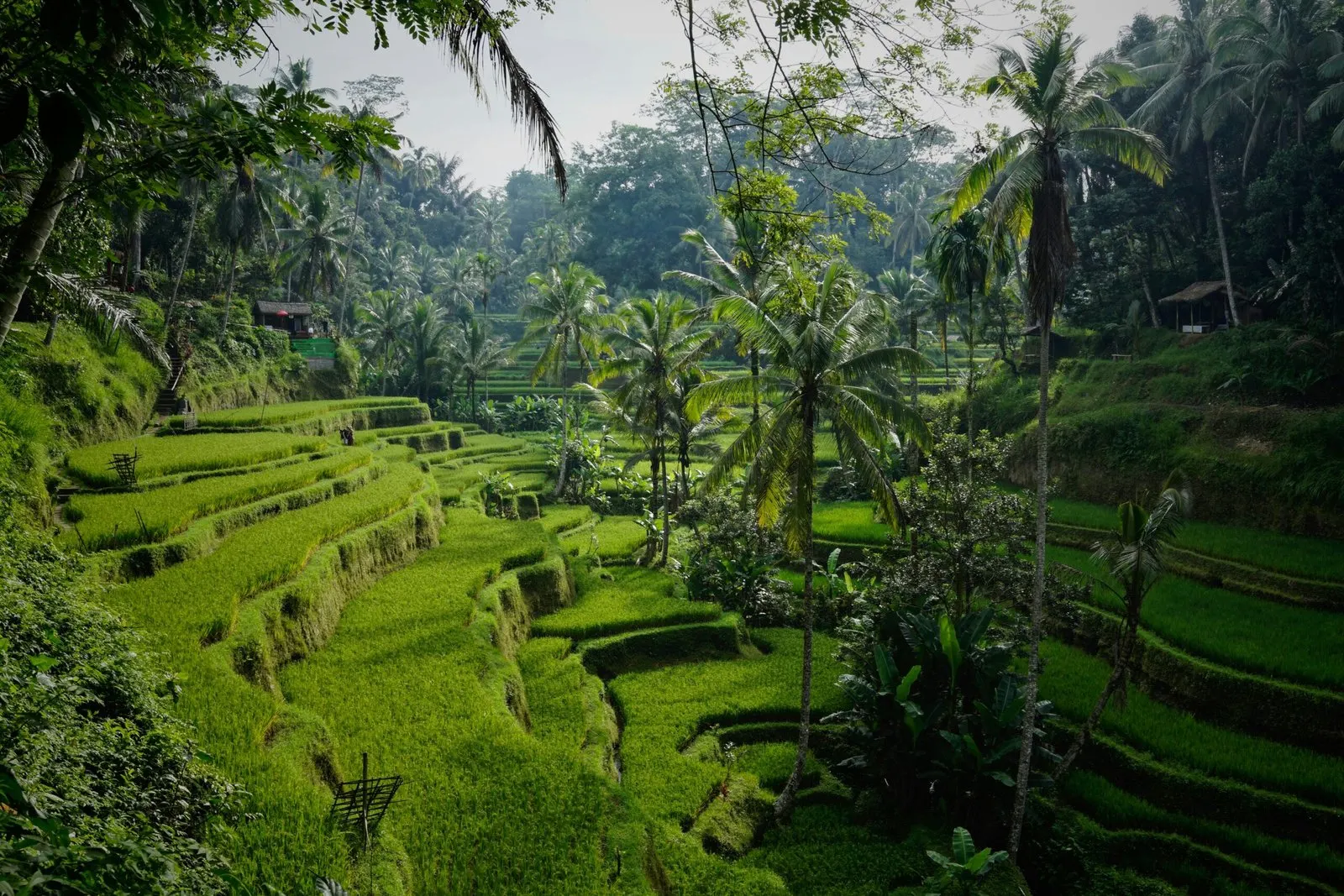
- Will The Famous Rice Terraces Still Look Beautiful If It Rains?

Home > Exploit The Seasons > Seasonal World Map > Asia > Indonesia > Bali
BALI
Beyond the honeymoon selfies and digital nomad hubs, Bali breathes differently in the quiet months. Think empty beach clubs, misty rice terraces, and villa deals that feel illegal. This guide reveals when to find authentic Bali.
Smart Travel Calendar
Shoulder Season
Your Smartest Windows
April (right after Nyepi and Easter crowds)
September (dry but cooling down, schools back)
October (first half – before Australian school holidays)
Avoid: mid-December to early January (Christmas, New Year, domestic tsunami) & Easter Week (Australian school break + European spring crowds)
What the Sky Does
April: 26–31°C (79–88°F) – rainy season ends, mornings sunny, lush everywhere.
September: 25–30°C (77–86°F) – dry, low humidity, cool breezes from the south.
October: 26–31°C (79–88°F) – still dry early, humidity rises late month.
Afternoon showers in April are brief and refreshing, not trip-wreckers.
September has the clearest views of Mount Agung and Mount Batur.
How Empty It Feels
35-45% fewer tourists vs July-August peak madness.
Ubud’s Campuhan Ridge: you’ll hear wind, not selfie sticks.
Canggu’s beaches: beanbags available at 4pm without a reservation.
Tanah Lot temple: walk to the water’s edge without queueing for photos.
Ferries to Nusa Penida: half-empty, drivers compete for your business.
What You’ll Save
Flights (from Australia/US/Europe): 25-35% off July prices.
Hotels and villas: 30-50% lower – that Four Seasons? Still pricey, but less so.
Scooter rental: $4-5/day instead of $8-10.
Private driver for the day: $35-40 instead of $60.
Surf lessons and boat charters: negotiate 20-30% down easily.
The Secret Perk
Melasti ceremony (March/April) – entire villages purify sacred objects at the sea.
Rice terraces at their greenest after April rains – Jatiluwih looks like a painting.
Durian and snake fruit season – roadside stalls overflowing, locals share their best.
Soft golden hour with atmospheric haze – portraits and landscapes look dreamy.
Warung owners have time to teach you their family recipes, not just serve you.
The Tiny Trade-Off
A few remote beach clubs (e.g., Savaya’s lower terrace) close for maintenance in April.
Occasional 1-2 hour downpour – pack a light poncho, wait it out with a coconut.
Some boat tours to Menjangan island (North Bali) reduce frequency in October.
Kite season ends in July – if you love giant sky kites, come earlier.
Smart Traveler Tip
East coast (Candidasa, Amed) is driest in April – great for skipping Ubud’s showers.
Book Sunset at Uluwatu Temple for 5:30pm – golden light, fewer monkeys, no crowd.
For the sweetest balance: first three weeks of September – dry, cool, empty.
Avoid the week of Nyepi (March) unless you want 24 hours of complete silence (which is magical, actually).
Deep Off-Season
Your Smartest Windows
January – March (except Chinese New Year week & Nyepi)
November – early December (before the Christmas rush)
Avoid: Chinese New Year (Jan/Feb – hotel prices spike, Kitamatra shouts) & Nyepi (March–island shuts down for 24h, but worth experiencing once)
What the Sky Does
25–30°C (77–86°F) – it’s never cold, it’s just wet or dry.
High humidity (75-85%) with dramatic, short afternoon thunderstorms.
Mornings are usually sunny until 1-3pm – plan outdoor activities early.
East coast (Amed, Candidasa) gets 30-40% less rain than Ubud or the west.
North coast (Lovina, Pemuteran) is surprisingly dry during deep off-season.
How Empty It Feels
60-75% fewer tourists vs July-August peak – Bali feels Balinese again.
Besakih Mother Temple: you and the priests, that’s it.
Ubud Monkey Forest: monkeys outnumber humans by 10 to 1.
Seminyak’s Eat Street: walk-ins welcome at Michelin-listed spots.
Small villages like Sidemen or Kintamani feel utterly untouched.
Beachfront in Sanur: find a bale (gazebo) at 10am on a Sunday.
What You’ll Save
50-70% savings on villas and resorts vs peak season.
Flights from anywhere: lowest prices of the year (except Christmas/CNY weeks).
Luxury villa in Seminyak: $50-80/night instead of $150-250.
Private driver full day: negotiate to $25-30.
Cooking class with market tour: $20-25 instead of $40-45.
Spa treatments: 2-for-1 deals everywhere (haggle gently).
The Secret Perk
Nyepi (Silent Day) – March: no lights, no sound, no travel. Just stars, silence, and magic.
Waterfalls at full thunder – Sekumpul, Tegenungan, Nungnung are absolutely roaring.
White-water rafting on the Telaga Waja – highest water levels, most exciting rapids.
Local temple ceremonies everywhere – you’ll be invited if you’re respectful.
Coffee luwak tastings feel private – the tour guide has hours to chat, not minutes.
Photography – dramatic skies, rain-soaked greens, misty volcanoes.
The Tiny Trade-Off
Some high-end beach clubs (Potato Head, Finn’s) close certain pools or areas.
Nightlife is very quiet – resident DJs go on holiday until April.
A few remote warungs (family restaurants) in North Bali close for low season.
Surf conditions can be choppy on the west coast (Kuta, Canggu) in January.
Daylight is consistent year-round (12 hours), but overcast days flatten colors.
Some yoga teacher trainings pause enrollment for minimum numbers.
Smart Traveler Tip
January is Bali’s quietest month – perfect for cultural deep dives and silence.
February is the wettest but cheapest – great for spa retreats and reading on a porch.
Book Nyepi (March) packages 2-3 months ahead – unique hotels fill up.
Pack: light rain jacket, dry bag, waterproof phone case, reef-safe sunscreen.
For mildest conditions in deep off-season: November (post-dry transition, least rain).
Best region for dry-ish weather during Jan-Feb: Amed, Candidasa, or Sanur (east coast shadow).
Travel tip: morning volcano sunrise hikes (Batur or Agung) – clearer before afternoon clouds roll in.
Find Off-Peak Flights
Top Off‑Season Stays
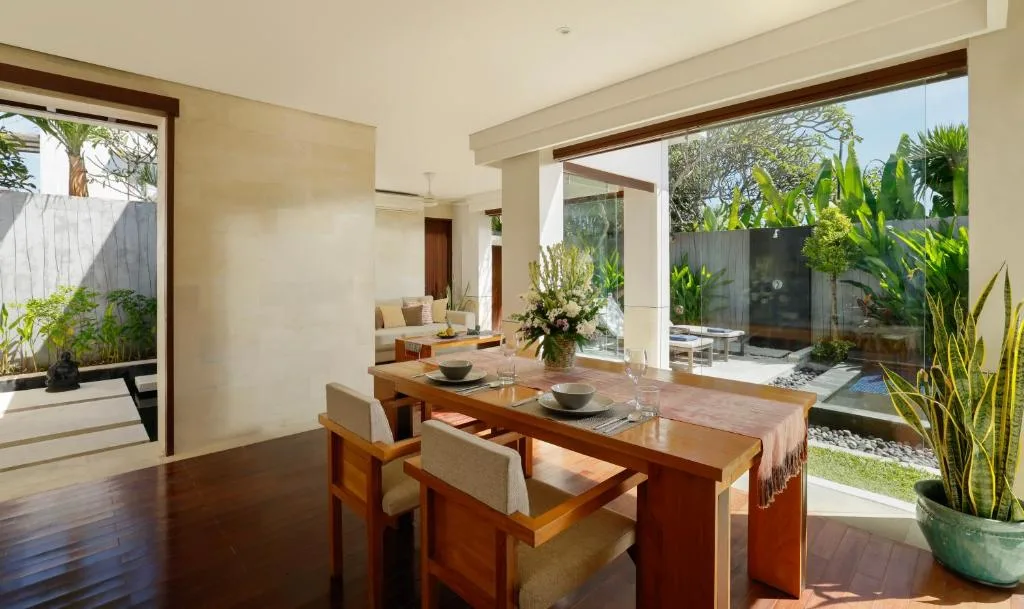
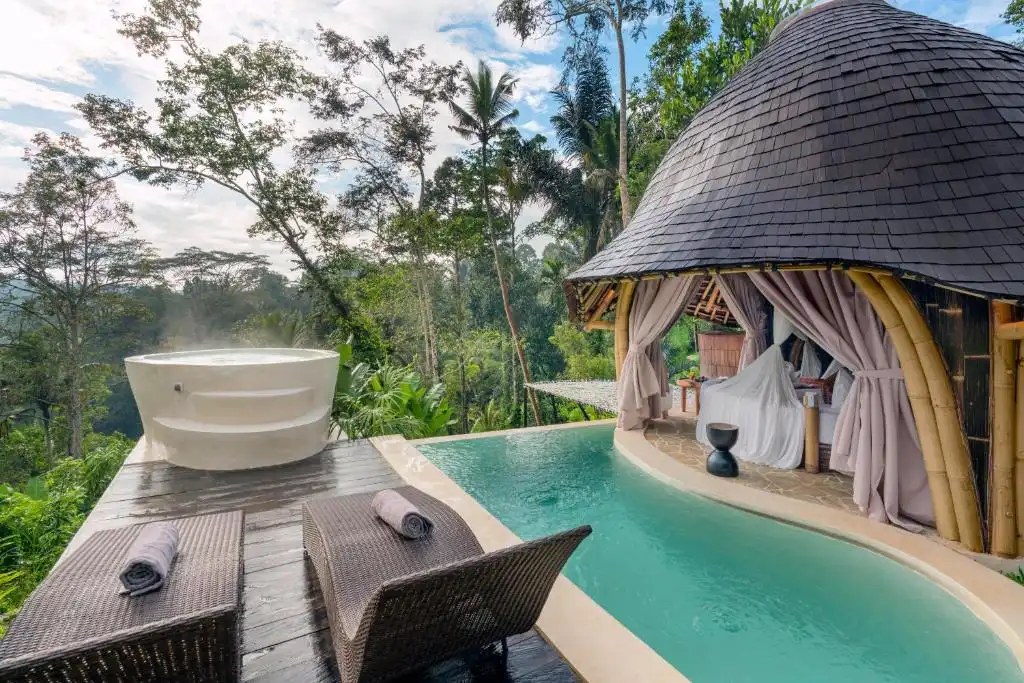
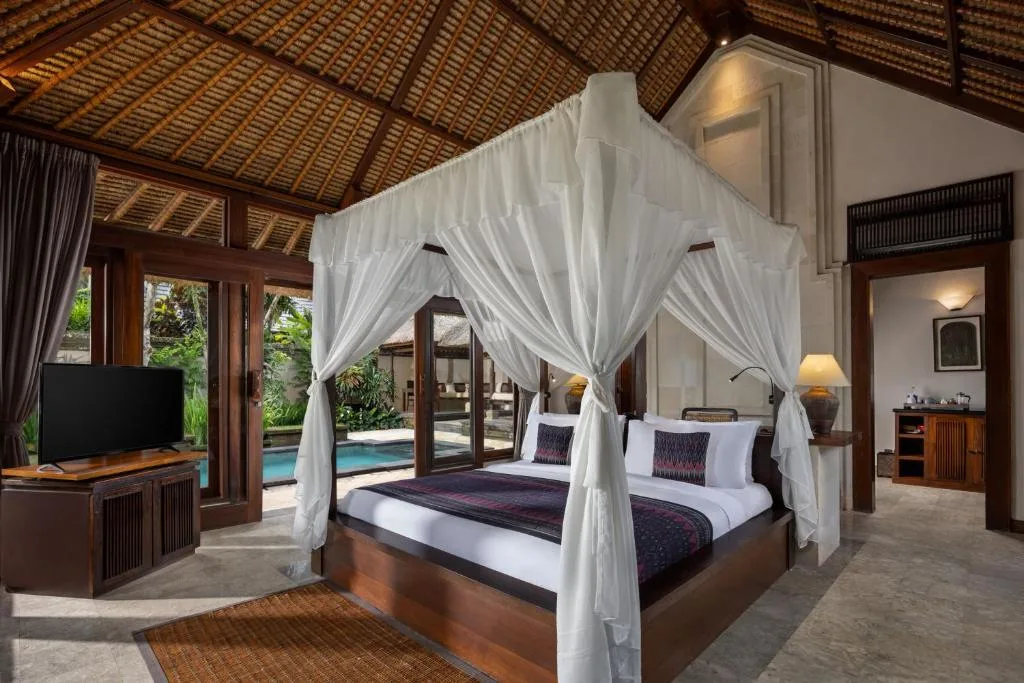
Find below our curated selection of boutique hotels and design apartments that offer exceptional value, atmosphere, and comfort during the off‑season — often at significantly lower rates than peak months.
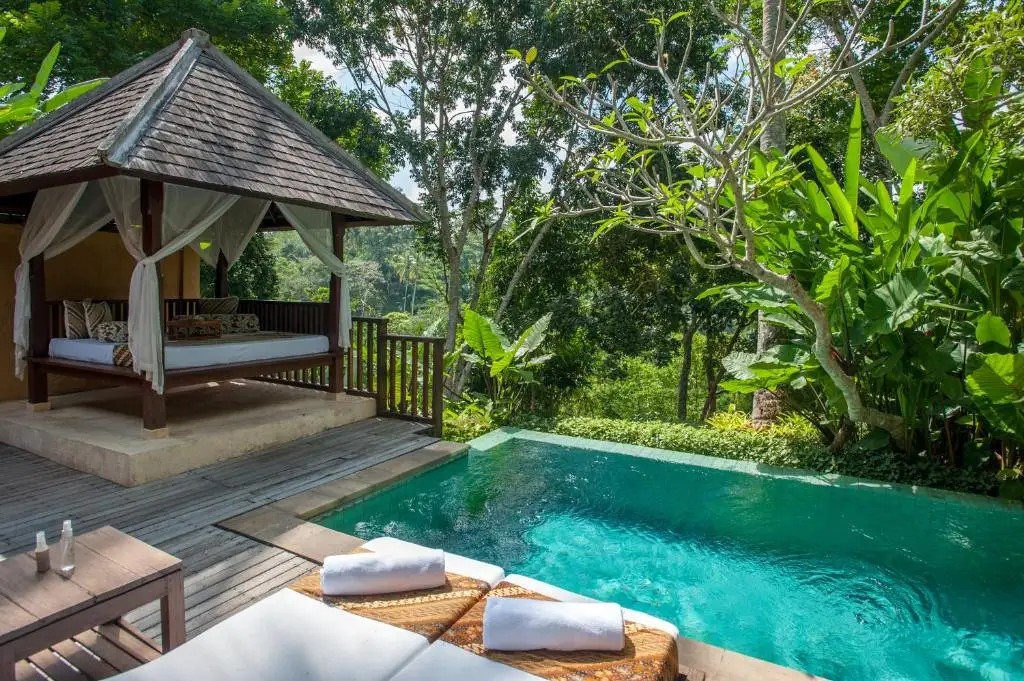
Komaneka
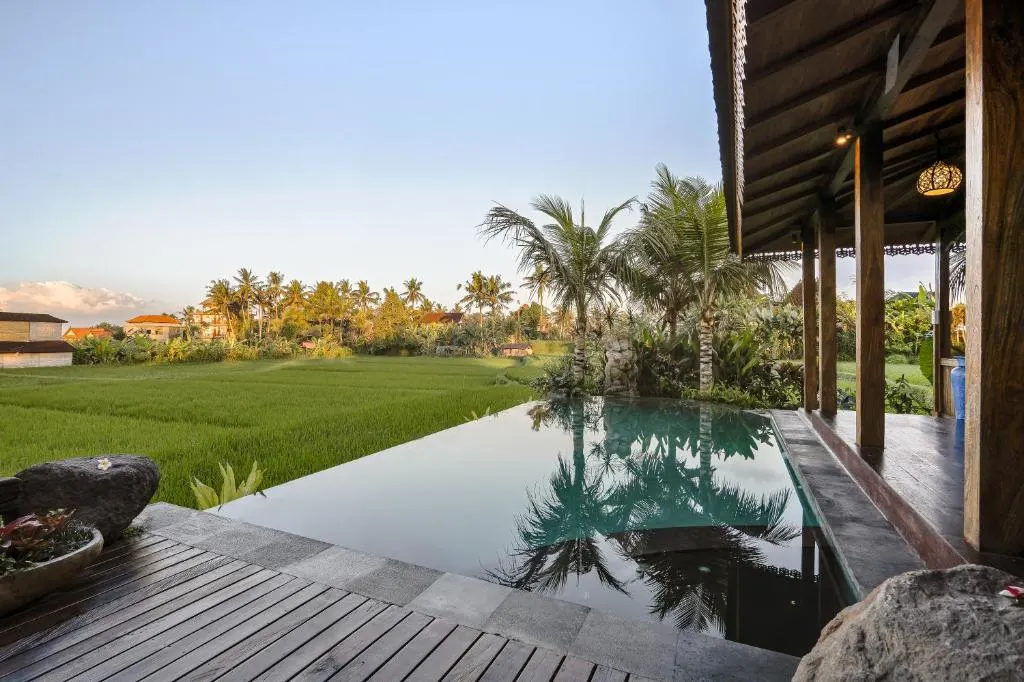
Airsania Ubud
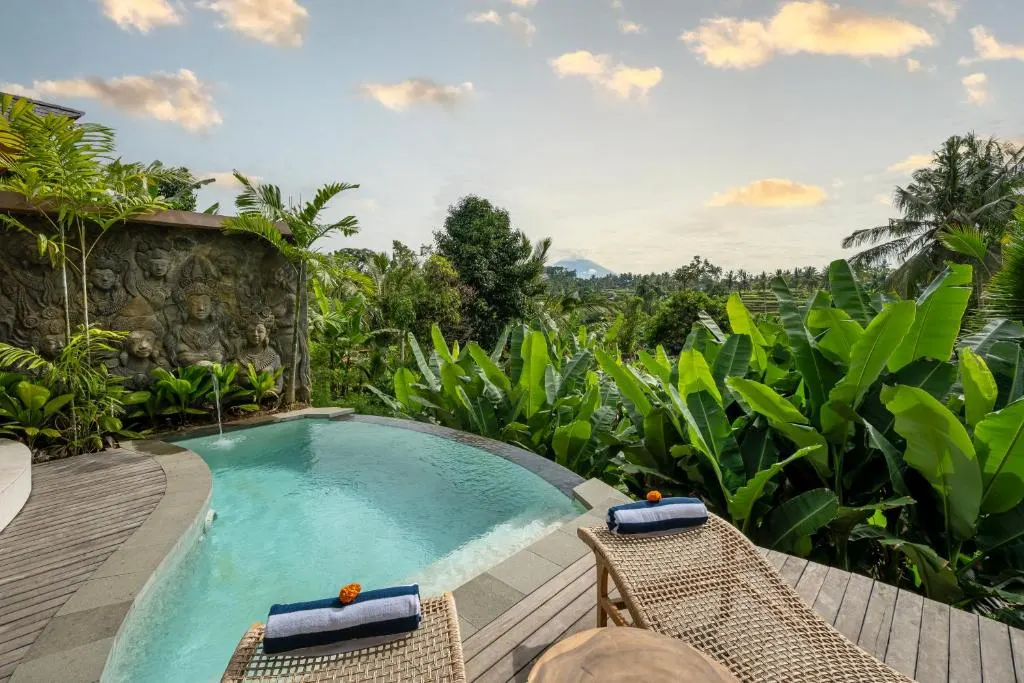
Govala Usada Villa
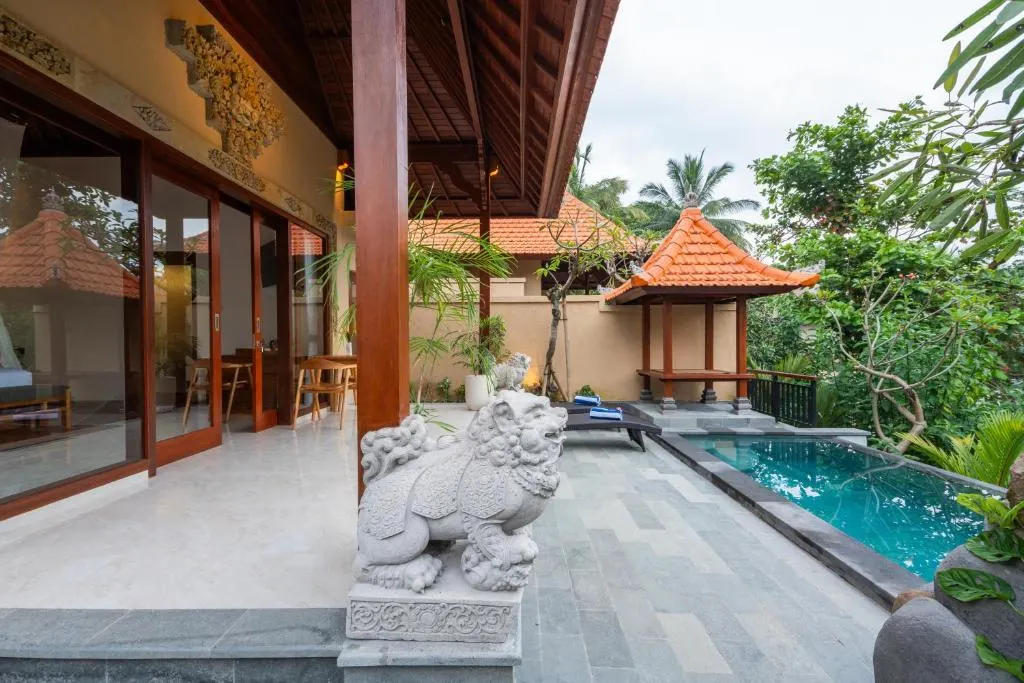
Tirtha Dawa Villa
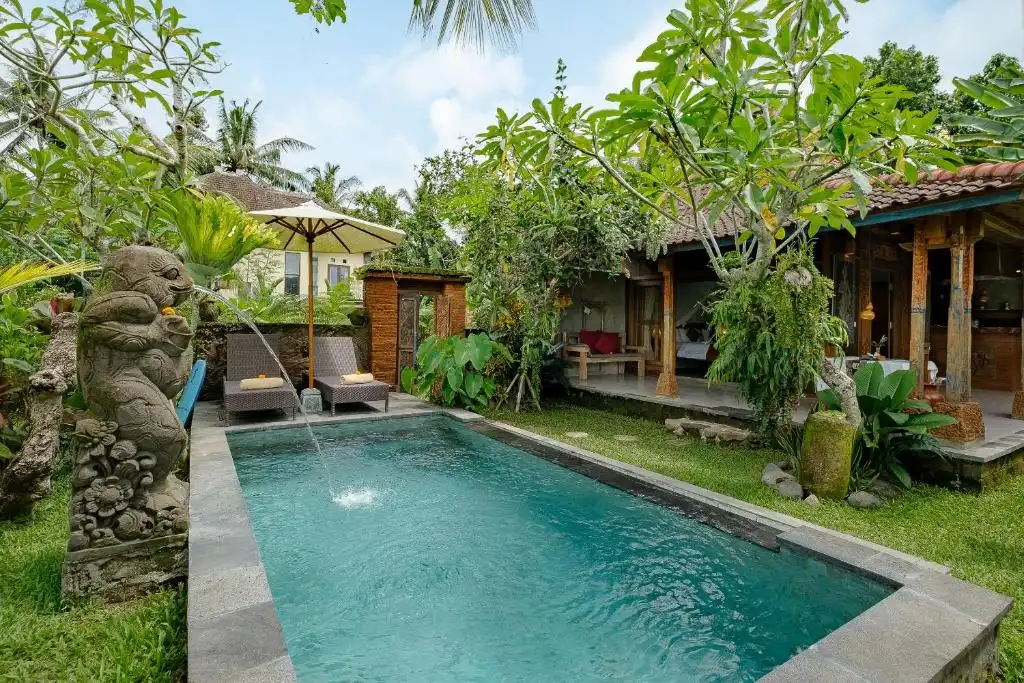
Moringa Ubud Villa
Uncrowded Experiences & Tours
Skip the lines and experience iconic landmarks at your own pace. Discover curated local tours and cultural activities designed to show you the authentic side of the destination without the peak-season rush.
Handy Tips
Weather & Climate
Bali has a tropical monsoon climate with two seasons: the Dry Season (April-October) and the Wet Season (November-March). Temperatures are warm and consistent year-round, averaging 26ºC to 28ºC.
Local Customs And Etiquette
Language: The official language is Indonesian (Bahasa Indonesia). Balinese is the local language. English is widely spoken in tourist areas.
Visiting Temples: Dress respectfully. Both men and women must wear a sarong and a sash, which can usually be rented at the entrance. Never point your feet at religious objects.
The Left Hand: Always use your right hand for giving or receiving items and for eating, as the left hand is considered unclean.
Budgeting For Your Trip
Accommodation: Hostels ($5–$15), mid-range guesthouses/hotels ($30–$80), luxury villas/resorts ($150+). Prices are highest in Seminyak/Uluwatu.
Food: Local warung meal ($2–$5), dinner at a mid-range restaurant ($10–$25 per person), fine dining ($40+).
Transport: Scooter rental ($5/day), taxi/ride-sharing (short ride $2–$5), private driver ($40–$60/day).
Activities: Temple entry fees ($1–$4), surf lesson ($30–$50), massage ($10–$25).
Daily Budget:
- Budget: $30–$50 (hostels, street food, public transport/scooter).
- Mid-range: $70–$120 (guesthouses/hotels, restaurants, attractions).
- Luxury: $180+ (villas/resorts, gourmet meals, private tours).
Getting Around
By Scooter: The most popular and flexible way to get around for short distances, but be aware of traffic and ensure you have an International Driving Permit.
By Ride-Sharing/Taxi: Apps like Gojek and Grab are widely used for affordable short rides (motorbikes and cars). Blue Bird Taxis are also a reliable option.
By Private Driver: For longer trips and day tours, hiring a private driver for the day is an affordable and comfortable option.
Must-Try Food
Babi Guling (Ba-bee Goo-ling): Whole spit-roast pig, a Balinese Hindu specialty, served with rice and spicy sambal.
Nasi Goreng (Nah-see Goh-reng): Indonesia’s iconic fried rice, often served with a fried egg and skewers of satay.
Mie Goreng (Mee Goh-reng): The fried noodle equivalent of Nasi Goreng, mixed with vegetables, chicken, and egg.
Sate Lilit (Sah-tay Lee-lit): Minced fish or chicken mixed with coconut milk and spices, molded around a lemongrass stalk and grilled.
Lawar (Lah-wahr): A traditional mixture of chopped meat, vegetables, grated coconut, and rich herbs and spices.
Betutu (Beh-too-too): Steamed or roasted chicken or duck heavily seasoned with a blend of rich Balinese spices.
Gado-Gado (Gah-doh Gah-doh): A vegetarian salad of blanched vegetables, hard-boiled eggs, and tempeh, served with a generous peanut sauce.
Sambal (Sahm-bahl): A ubiquitous hot sauce or paste made from a variety of chilli peppers, often served alongside every dish.
Jaje Bali (Jah-jeh Bah-lee): A general term for traditional Balinese sweet snacks, often made with glutinous rice, coconut, and palm sugar.
Pisang Goreng (Pee-sahng Goh-reng): Fried banana fritters, a popular dessert or street food snack.
Must-Try Drinks
Bintang: Indonesia’s most popular mass-produced lager beer, often served icy cold.
Arak Bali: A traditional distilled spirit, often made from fermented rice or coconut flower sap. Caution: Only consume Arak from reputable sources.
Tuak: A traditional palm wine, mildly alcoholic with a milky appearance, often enjoyed socially in rural areas.
Luwak Coffee (Loo-wahk): Also known as civet coffee, it is made from beans that have been eaten and excreted by the Asian palm civet.
Es Kelapa Muda (Ess Keh-lah-pah Moo-dah): Fresh young coconut water, served directly from the coconut, often with ice.
Jamu (Jah-moo): Traditional herbal drinks made from natural ingredients like turmeric, ginger, and tamarind, famous for their medicinal properties.
Jus Alpukat (Jooce Ahl-poo-kaht): A rich avocado juice, often blended with chocolate syrup and condensed milk.
Brem: A sweet and sour Balinese rice wine, traditionally used in ceremonies.