 Skip to content
- Is Mykonos Still Fun In The Off-Season If The Famous Beach Parties Stop?
Yes, but the definition of fun shifts from chaotic dancing to peaceful discovery. You will trade pounding bass for the sound of wind and waves, gaining the ability to walk through Mykonos Town's whitewashed alleys without losing your travel group every two minutes.
The real drawdown is that the legendary beach clubs like Paradise and Super Paradise shut down completely. However, you can Exploit Travel Seasonality by enjoying the locals-only bar scene in town, where drinks cost up to 40% less and you might actually get to chat with the bartender, plus hotel rates drop by 50% to 70%.
- How Windy Does Mykonos Actually Get During The Low Season?
Yes, the famous Meltemi wind can still blow, making some days feel sharper and chillier than the temperature suggests. You will learn quickly why the island has so many iconic windmills when you feel gusts that would knock over a weaker traveler.
The downside is that walking along exposed coastal paths or sitting at seaside tavernas becomes unpleasant on very windy days. To work around this, stick to the sheltered inner streets of Mykonos Town or head to Ano Mera village in the center of the island, where wind is less punishing and you can find accommodation discounts of 30% to 45% off peak summer pricing.
- Are The Restaurants And Shops Open Or Is The Island Totally Asleep?
Yes, you will find a slower but more authentic version of Mykonos open for business. The family-run tavernas in the town center stay open to serve locals and the savvy travelers who know that winter is the time for real Greek hospitality, not rushed service.
The realistic drawback is that the high-end designer boutiques and celebrity chef restaurants close their doors completely. Instead of chasing luxury brands, use this chance to eat at a traditional kafeneio where a full Greek meal might cost you 25% less than a single cocktail would have in July, with zero pretension.
- Can I Still Visit The Famous Windmills And Little Venice In Bad Weather?
Absolutely, and you will have them nearly to yourself. Watching the waves crash against the iconic balconies of Little Venice during a stormy day is actually more dramatic and memorable than squeezing through sweaty crowds for a sunset photo.
The trade-off is that the sea spray can make walking along the waterfront slippery and uncomfortable on rough days. To maximize value, visit these landmarks early in the morning when winds are calmer, then retreat to the nearby Archaeological Museum of Mykonos to warm up, enjoying a cultural experience with up to 90% fewer tourists and hotel prices discounted by 40% to 60%.
- Is It Worth Visiting Mykonos If The Ferry Schedule To Delos Is Reduced?
Yes, the famous sacred island of Delos might be harder to reach, but Mykonos itself becomes your private playground. You will discover that the best views of the Aegean come from hiking between the hills of Ano Mera without wiping sweat from ten other hikers' elbows.
The main downside is that daily boat trips to Delos might only run a few times per week or stop entirely in deep winter. To Exploit Travel Seasonality, pivot your plans toward exploring the interior of Mykonos by rental car, which you can book at nearly 35% less than summer weekly rates, and use the money saved to enjoy longer, warmer meals in the cozy village tavernas.

Home > Exploit The Seasons > Seasonal World Map > Europe > Greece > Mykonos
MYKONOS
Mykonos sheds its glitzy summer skin to reveal raw Cycladic beauty: whitewashed alleys just for you, wind-sculpted silence, and sea views without the velvet rope. This is your guide to authentic island magic, minus the jet-set crowds.
Smart Travel Calendar
Shoulder Season
Your Smartest Windows
Late April to early June
September to mid-October
Avoid: Greek Easter Week (orthodox Easter – Mykonos fills with Greek-Australian and Athenian crowds, hotel prices triple, clubs open early but overcharge)
What the Sky Does
19°C to 27°C (66°F to 81°F) — warm enough for swimming, cool enough for exploring
Sea temperatures are ideal in September (up to 24°C / 75°F)
Meltemi wind is present but manageable, unlike July’s gusts
Sunshine dominates, with occasional brief autumn showers in October
How Empty It Feels
60-70% fewer tourists vs. peak July-August
Mykonos Town’s alleys feel spacious — no shuffling behind cruise crowds
Ornos and Platys Gialos beaches have open loungers without waitlists
Paradise Beach bar serves you instantly — no queues, no attitude
What You’ll Save
40-50% on flights and luxury hotels compared to August rates
Car and ATV rentals drop by half — and you can actually find one
No cover charges at beach clubs — or entry fees waived before 2 PM
Dinner reservations available same-day at formerly impossible restaurants
The Secret Perk
Local festivals come alive — religious panigiria with free wine and dancing
Light is buttery and golden for hours, not the harsh midday glare of summer
Farmers sell fresh capers and honey at roadside stands, not tourist shops
You’ll hear real conversations between fishermen, not just influencer scripts
The Tiny Trade-Off
Some beach clubs close by mid-October (Scorpios, Nammos wind down)
Evenings can feel breezy — a light jacket becomes your best friend
Ferry schedules reduce slightly (still frequent, just not every 30 minutes)
Early May still has lingering spring chill in the water
Smart Traveler Tip
Target last week of May or first week of October for peak sweet spot
Book late September for warmest sea temps and active beach bars
Avoid Greek Easter (floating) if you want empty — it gets surprisingly busy
Rent a car for north beaches (Agios Sostis) — they’re deserted and stunning
Deep Off-Season
Your Smartest Windows
November to March (avoid Christmas and New Year)
Avoid: Christmas week through January 2 (few places open, but those that are charge premium for “romantic winter getaway” – not worth it)
What the Sky Does
10°C to 16°C (50°F to 61°F) — crisp, clear, and very windy
Rain is rare — most days are sunny with dramatic cloudscapes
The sea is rough for swimming but spectacular for storm-watching
Humidity is zero — that sticky summer feeling is long gone
How Empty It Feels
90% fewer tourists than peak — you’ll count residents, not visitors
The windmills have zero queues — just you and 600 years of history
Archaeological museum feels private — the guard might give you a tour
Villages like Ano Mera are completely local — coffee shops speak only Greek
What You’ll Save
Up to 70% off summer prices for hotels and villas
Flights drop to bargain basement — often €50-80 from Athens
Ferry tickets cost less and you walk straight on, no queues
Car rentals start at €15/day — yes, fifteen euros
The Secret Perk
Winter storms over the Aegean are cinematic — perfect for writers and artists
Cooking classes with yiayias (grandmas) who have time to teach you
Explore deserted ancient ruins like Delos without 3,000 cruise passengers
Cozy kafeneia with roaring wood stoves and €2 Greek coffees
You’ll make genuine local friends — taverna owners will sit and chat for hours
The Tiny Trade-Off
Most beach bars and nightclubs are shuttered until spring
Many luxury boutiques and restaurants close from November to March
Ferries to smaller islands (Donousa, Koufonisia) stop or reduce drastically
Daylight is short — sunrise 7:15 AM, sunset 5:15 PM in December
Smart Traveler Tip
February is the quietest month — also the windiest, so pack layers
Stay near Mykonos Town — it has the only year-round restaurants and shops
Book a place with a fireplace — it transforms the cold nights into magic
Pack a windproof jacket and boots — you’ll walk more and drive less
Find Off-Peak Flights
Top Off‑Season Stays
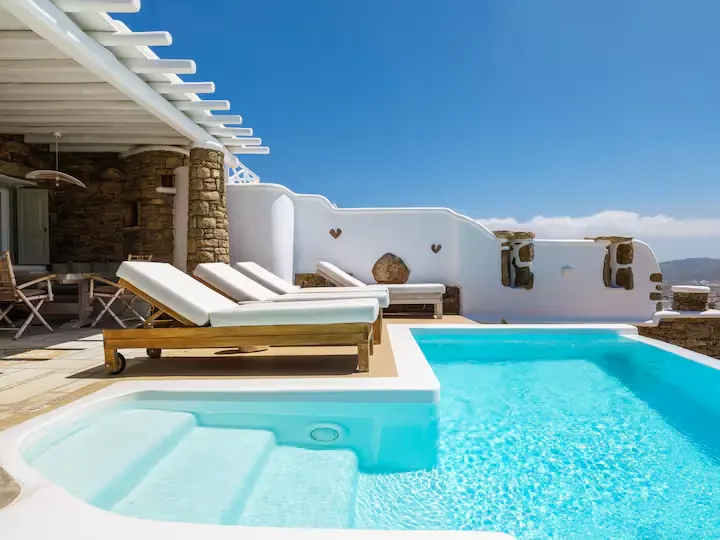
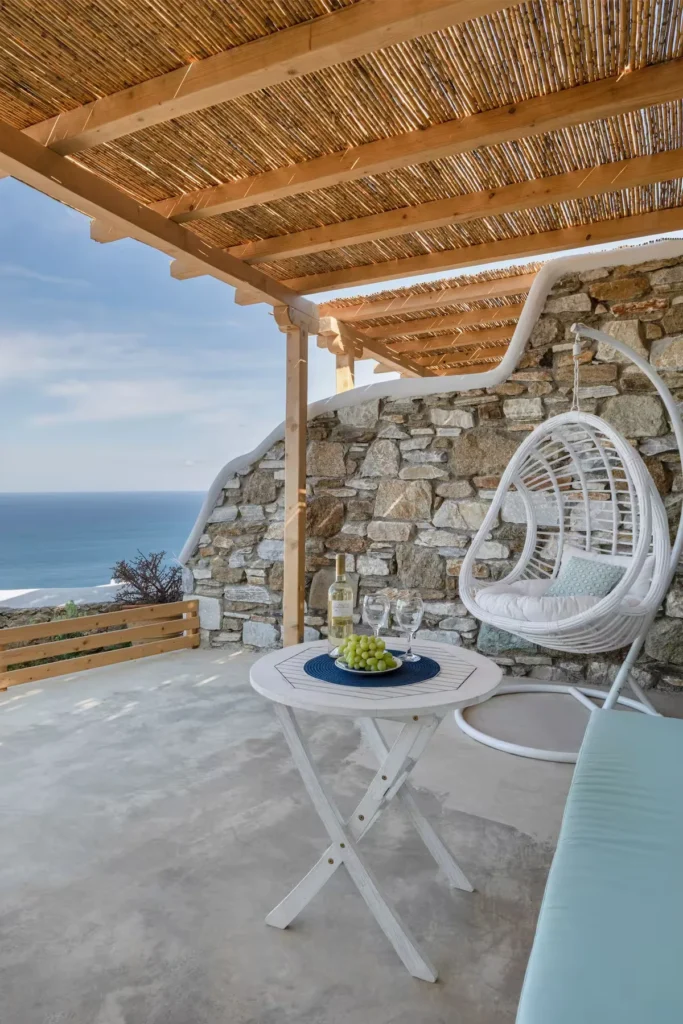
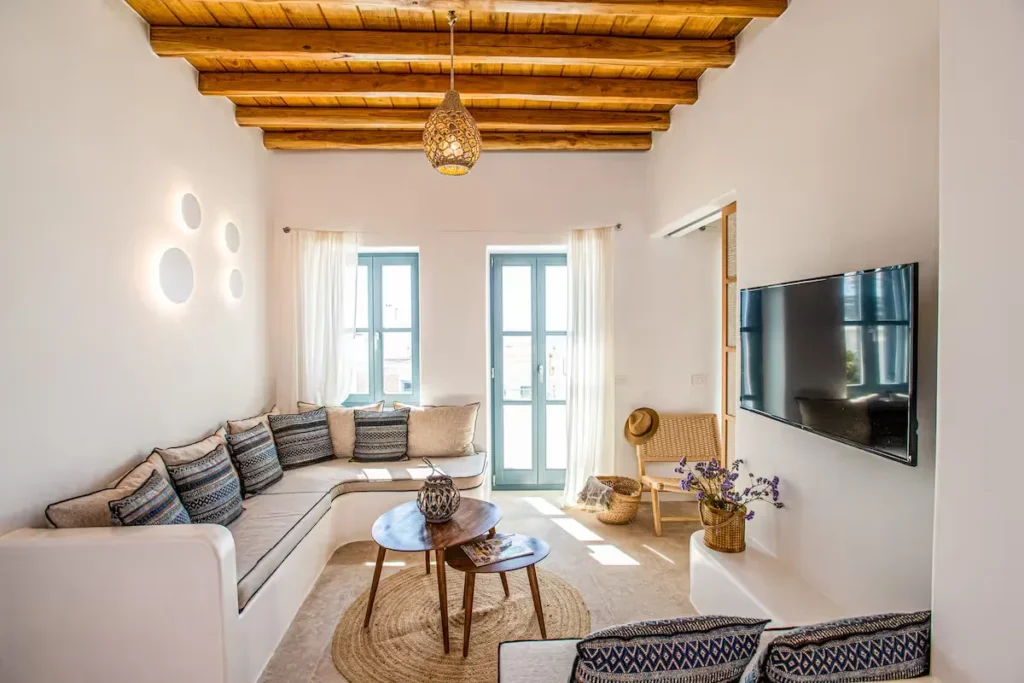
Find below our curated selection of boutique hotels and design apartments that offer exceptional value, atmosphere, and comfort during the off‑season — often at significantly lower rates than peak months.
Uncrowded Experiences & Tours
Skip the lines and experience iconic landmarks at your own pace. Discover curated local tours and cultural activities designed to show you the authentic side of the destination without the peak-season rush.
Handy Tips
Weather & Climate
Mykonos has a Mediterranean climate with hot, dry summers and mild winters. The Meltemi (a strong, dry northern wind) blows during summer, providing a welcome cooling breeze but also causing rough seas.
Local Customs And Etiquette
Language: Greek is the official language. English is widely spoken in tourist areas, but a few basic Greek phrases are appreciated.
Dining: Dinner often starts late, around 9:00 PM or 10:00 PM. Tipping is not mandatory but appreciated (usually rounding up or 5-10%).
Photography: Mykonos Town is very popular for photos, but be respectful of private homes, and avoid photographing people without their permission.
Budgeting For Your Trip
Accommodation: Hostels ($35–$60), mid-range hotels ($100–$250), luxury ($300+). Prices are extremely high during peak season and often double.
Food: Gyros/Souvlaki ($5–$10), dinner at a mid-range taverna ($30–$50 per person), fine dining ($80+). Beach clubs charge a premium.
Transport: Local bus ticket ($2–$4), taxi (often fixed, high rates), sea bus/water taxi ($6–$20).
Activities: Beach club sunbed/umbrella ($30–$150 per set), Delos boat tour ($50–$80).
Daily Budget:
- Budget: $80–$120 (hostels, street food, public transport).
- Mid-range: $180–$350 (standard hotel, taverna meals, a few cocktails).
- Luxury: $400+ (boutique hotels, gourmet dining, beach club service).
Getting Around
By Bus: A reliable and affordable network connects Mykonos Town to all the major beaches and villages. This is the best way to get around cheaply.
By Sea Bus/Water Taxi: Connects the New Port to Mykonos Town, and a water taxi service runs between many of the south coast beaches.
By Taxi: Taxis are limited, and finding one during peak hours or late at night can be very difficult. Always agree on the fare beforehand.
By Scooter/ATV: Common for exploring, but be aware that the roads can be narrow, winding, and busy, so drive with caution.
Must-Try Food
Gyros/Souvlaki: The classic Greek fast food—grilled meat (pork or chicken) served in pita bread with tzatziki, tomato, onion, and fries.
Kopanisti: A strong, salty, and spicy soft cheese with a Protected Designation of Origin (PDO) from Mykonos and the Cyclades.
Louza: A cured pork loin similar to prosciutto, seasoned with pepper and allspice—a famous Mykonian delicacy.
Mykonian Sausage: Pork sausages seasoned with oregano, salt, and pepper, often sun-dried for flavor.
Fish and Seafood: Freshly caught seafood is a staple, from grilled octopus to calamari and sea bass.
Greek Salad (Horiatiki): Fresh tomatoes, cucumber, onion, bell pepper, olives, and a large slab of feta cheese, dressed with olive oil and oregano.
Moussaka: Layers of sautéed eggplant, minced meat, and a creamy béchamel sauce, baked until golden.
Amygdalota: Delicious, chewy almond cookies, often shaped like small pears or balls, a classic Cycladic sweet treat.
Baklava: Layers of flaky phyllo pastry filled with chopped nuts and sweetened with syrup or honey.
Yogurt with Honey and Walnuts: A traditional and healthy dessert or breakfast.
Must-Try Drinks
Ouzo: A dry anise-flavored aperitif. It turns milky when mixed with water or ice and is typically served with small appetizers (meze).
Tsipouro/Raki: A strong, clear distilled spirit, similar to Italian grappa. The Mykonian version is potent.
Greek Wine: Try local white wines, which are light, crisp, and perfect for the summer heat.
Mythos/Fix: Popular Greek lager beers, widely available and refreshing.
Frappé: The iconic Greek iced coffee, made with instant coffee, water, and sugar, shaken to create a foam.
Freddo Espresso/Freddo Cappuccino: The more modern (and strong) iced coffee, made with espresso and served over ice. The Cappuccino version has cold foam.
Sodá Lemonáda/Vissináda: Traditional Greek lemon soda or a refreshing, thick sour cherry syrup mixed with cold water.