 Skip to content
- Will The Weather Ruin My Trip To Greece During The Off Season?
No, but it will change your expectations beautifully. You can absolutely exploit travel seasonality here by trading crowded Santorini sunsets for dramatic storm-lit skies over the Acropolis and misty mornings on Crete.
The drawdown is that island hopping becomes windier and the sea is too cold for swimming. The upside? You will explore Ancient Delphi and the Palace of Knossos without heatstroke, and you will discover that Greek mountain villages have their own cozy magic.
- Is It Hard To Get Around Greece When Fewer Tourists Are Visiting?
Yes, but only if you focus on the small islands. Domestic flights to Crete, Rhodes, and Corfu run year-round, but many ferry routes to the Cycladic gems like Mykonos and Paros reduce to weekly sailings.
The real win is on the mainland. You will drive from Athens to the Peloponnese or Meteora with empty roads, and local buses become stress-free when they are not packed with rolling suitcases. Just plan your island crossings carefully.
- How Much Can I Save On Hotels And Catamaran Tours In The Greek Low Season?
Expect to save between 40% and 60% on most accommodations and private boat experiences. That Volomundi sweet spot means a cliffside room on Santorini or a luxury stay in Nafplio costs roughly half of what summer visitors pay.
The drawdown is that some island hotels and nearly all day-cruise operators close from November to March. However, the hotels that remain open often give you jacuzzi upgrades or complimentary Greek breakfasts just for showing up.
- Will I Find Tavernas And Ancient Sites Closed In Greece's Deep Off Season?
Not in Athens or the larger cities, but small island villages become ghost towns. You will find the Acropolis, the ancient theatre of Epidaurus, and central Athens tavernas open with no queues and instant service.
The downside is that family-run seaside tavernas on Naxos or Milos may shut entirely. Flip this into a positive by heading inland to mountain villages like Arachova or Zagori, where locals welcome winter travelers with warm wine and open fires.
- Are The Crowds Really That Much Lighter Outside Of Summer In Greece?

Home > Exploit The Seasons > Seasonal World Map > Europe > Greece
GREECE
Greece isn’t just a summer fling. Imagine ancient ruins without the selfie sticks, island lanes all to yourself, and sea views that cost half the price. Welcome to the real Hellas.
Smart Travel Calendar
Why Choose Greece Off-Season?
Fewer ferries, more you. Sail without sardine-can crowds on inter-island routes.
Your own personal acropolis. Climb the Parthenon with space to actually breathe.
Olive harvest season. Taste this year’s first press alongside village grandpas.
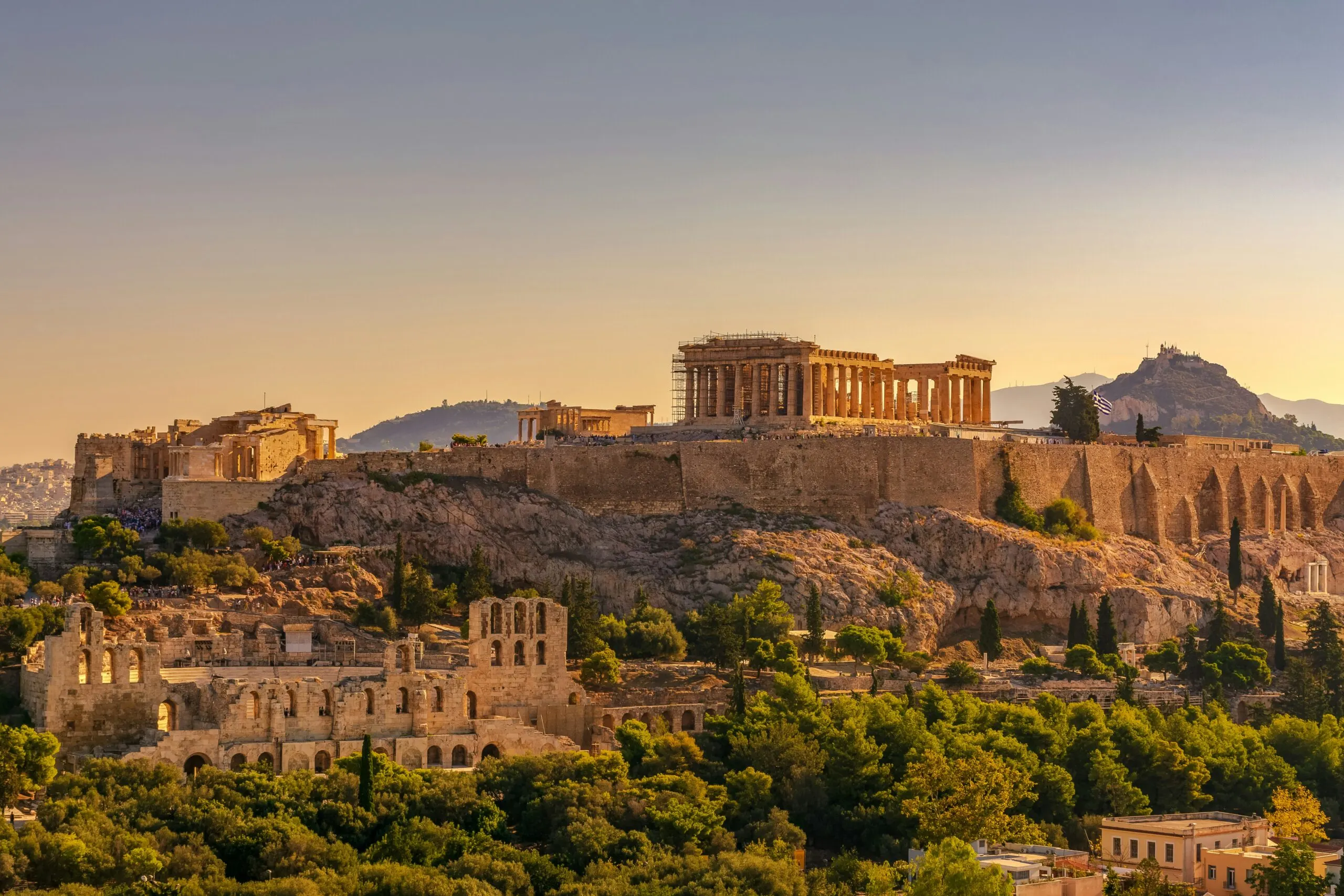
Hotels drop their prices. That cliffside suite? Now cheaper than a city hostel in summer.
Hike without melting. Trails on Crete or Samaria Gorge are actually enjoyable.
Real conversations, not scripts. Taverna owners have time to share family recipes.
Shoulder Season
Your Smartest Windows
April to early June
September to October
Avoid: Easter Week (Greek Orthodox Easter moves – prices spike across islands and mainland for 10 days, with ferries packed and rooms doubled)
What the Sky Does
April & October: 15-22°C (59-72°F); May & September: 22-28°C (72-82°F)
Island breezes keep coastal areas comfortable without the August blast furnace
Mainland afternoons can be warm; evenings need a light jacket near water
Occasional spring showers (April) and autumn storms (late October) — brief and dramatic
How Empty It Feels
50-60% fewer tourists than peak July-August
Santorini sunset crowds? More like 20 people instead of 2,000
Mykonos streets feel like a Cycladic village again, not a runway traffic jam
Walk straight into the Acropolis Museum — no timed tickets needed
What You’ll Save
Flights 40% less; hotels 50-60% off compared to August rates
Car rentals drop by nearly half — even automatic convertibles are reasonable
Ferry tickets available same-day, with deck space to stretch out
Dinner with sea view: no cover charge, and they might send dessert
The Secret Perk
May: Feast of Agios Georgios — village dancing and roasted lamb
Hillsides explode in red poppies and yellow daisies (April-May)
September: Grape harvest — stomp grapes at a local winery on Paros or Crete
Golden hour lasts longer, painting white walls in soft honey light
Fishermen invite you to see the morning catch before menus are printed
The Tiny Trade-Off
Some beach bars and water sports open only from late May
Early April sea temperatures are still brisk (16-18°C / 61-64°F)
A few small-island ferry routes reduce frequency in October
Easter week (March/April) sees local travel spikes — book ahead
Smart Traveler Tip
For islands: aim mid-May to early June or September for perfect sea temps
For mainland archaeology: October offers cool walks and autumn colours
Best balance window: 25 May – 10 June and 1–20 September
Avoid late October if you want daily ferries to smaller islands
Deep Off-Season
Your Smartest Windows
November to March (excluding Christmas/New Year)
Avoid: Christmas through 2 January (mainland city breaks price up, Athens hotels fill)
What the Sky Does
Winter: 8-15°C (46-59°F) — Athens mild, northern mountains near freezing
Rainy spells, but also brilliant blue-sky days that fool you into thinking it’s spring
Crete and Rhodes stay warmest; Thessaloniki gets frost; mountain villages see snow
Humidity drops — no sticky summer air, just crisp Mediterranean light
How Empty It Feels
80-90% fewer tourists than peak season
Delphi, Olympia, Epidaurus: you and the ghosts of antiquity — nothing else
National Archaeological Museum in Athens feels like a private collection
Small towns like Kardamyli or Monemvasia: locals nod hello because you’re the news
What You’ll Save
Up to 70% off peak-season prices for flights and hotels combined
Round-trip to Athens from Europe for under €50 on sale weeks
Five-star hotels in Athens for the price of a hostel bunk in July
Car rental from €8/day — yes, eight euros
The Secret Perk
Cozy kafeneia life — play backgammon by the wood stove for hours
Ski Arachova or Pelion — slopes two hours from Athens, with sea views
Apokries (Greek Carnival) — January/February costume parties and meat feasts
Olive picking — join a family harvest on Crete or Lesvos for room and raki
Taverna owners become friends, not waiters — they’ll teach you to say “Yamas” properly
The Tiny Trade-Off
Most beach loungers are stacked away; swimming is for the brave (or Finnish)
Nightclubs on Mykonos and Ios are shut until spring
In very small villages, the only open taverna might be one — but it’s the best one
Daylight: sunrise ~7:30am, sunset ~5:15pm (December)
Smart Traveler Tip
For festive charm: Athens December 15-23 before local holidays — lights without crowds
Quietest month of all: January (post-Christmas lull, pre-spring nothing)
Best pre-spring hint: late February — almond blossoms explode across Attica
Pack layers and a waterproof jacket — and one nice outfit for surprise sunny days
Mildest deep off-season: Crete (15°C / 59°F average high in January)
Find Off-Peak Flights
FAQs
Explore Greece
Essential Trip Information
Visa and Entry Requirements
Greece is part of the Schengen Area, allowing visa-free travel for short stays (up to 90 days within 180 days) for citizens of the US, Canada, Australia, New Zealand, and the EU.
Check visa requirements based on nationality via the Greek Ministry of Foreign Affairs or your local consulate.
Passports must be valid for three months beyond your stay and issued within the last ten years. Six months of validity is recommended.
Immigration may request proof of onward travel (return ticket) and sufficient funds.
Currency
Greece uses the Euro (€). Banknotes: €5–€500 (€200/€500 rarely used). Coins: 1c–€2.
Best Ways to Handle Currency
Before Your Trip: Exchange a small amount for immediate needs; avoid airport rates. Consider travel cards (Revolut, Wise) for better rates.
During Your Trip: Use ATMs at major banks (Alpha Bank, Piraeus Bank). Opt to be charged in euros. Cards (Visa/Mastercard) are widely accepted, but keep €50–€100 cash for islands and small businesses.
What to Avoid: Tourist-area exchange offices and standalone ATMs with high fees.
Language
Official language: Greek. English is widely spoken in tourist areas.
Learn basics: Yasou (Hello), Efharistó (Thank you), Miláte angliká? (Do you speak English?).
Safety & Security
Generally safe, but pickpocketing can occur in crowded areas (Athens, public transport).
Use common sense: avoid unlit streets at night, secure valuables.
Emergency number: 112.
Health & Insurance
No special vaccinations required.
EU citizens: Bring EHIC card; others need travel insurance.
Pharmacies (red cross sign) provide over-the-counter help. Tap water is safe in cities; check for islands.
Transportation
Cities: Metro (Athens), buses, and trams. Multi-day passes save money.
Ferries: Essential for island hopping (Blue Star, Hellenic Seaways).
Driving: Ideal for mainland exploration; note narrow island roads.
Taxis/Ride-sharing: Uber not available; use Beat or local taxis.
Price Level
Greece ranges from affordable (mainland, smaller islands) to expensive (Santorini, Mykonos).
Accommodation
Budget: Hostels/budget hotels (€25–€50/night)
Mid-range: 3-star hotels (€70–€150/night)
Luxury: 4-5 star hotels (€200+/night)
Food
Taverna meals: €10–€20 (main dish + salad)
Gyros/Souvlaki: €3–€6
Restaurant dinners: €20–€35/person
Coffee: €2–€4 (frappé or espresso)
Drinks
Beer: €3–€6 (bars), €1–€2 (supermarkets)
Wine: €4–€10/glass
Ouzo/Raki: €3–€8
Transportation
Ferries: €20–€80 (island hopping; book early)
Buses (KTEL): €5–€25 (intercity)
Metro (Athens): €1.20–€1.50/ride
Gasoline: ~€1.70–€2.00/liter
Money-Saving Tips
Travel off-peak (avoid July–August).
Eat at local tavernas, not tourist-fronted restaurants.
Use island ferry passes for multiple trips.
Planning Your Trip
Local Customs And Etiquette
Greetings: A handshake or “Yassas” (hello). Cheek kisses among friends.
Dining: Lunch at 2–4 PM; dinner after 9 PM. Share meze (small plates); never refuse ouzo!
Tipping: Round up bills (5–10%); not mandatory but appreciated.
Dress Code: Cover shoulders/knees in monasteries (Meteora, Mount Athos).
Shopping: Siesta hours (2–5 PM) in small towns; markets close Sundays.
Budgeting For Your Trip
Accommodation: Hostels (€25–€50), mid-range hotels (€60–€120), luxury (€200+).
Food: Souvlaki (€2.50), taverna meal (€15–€25), fine dining (€50+).
Transport: Ferries (€30–€80), metro tickets (€1.20), car rental (€35/day).
Activities: Acropolis (€20), Delos tour (€15), free beach days.
Daily Budget:
Budget: €50–€80 (hostels, street food, buses).
Mid-range: €100–€180 (hotels, tavernas, ferries).
Luxury: €250+ (villa stays, private tours).
Internet & Mobile
Free Wi-Fi: Cafés, hotels, and some public squares.
SIM Cards: Cosmote or Vodafone (€10–€20 for 5GB). EU roaming applies.
eSIMs: Supported (Airalo, Holafly).
Travel Insurance
Essential for: Medical emergencies, ferry cancellations, lost luggage.
EU Citizens: EHIC/GHIC covers basics; supplement with private insurance.
Adventure Coverage: Needed for scuba diving (Santorini) or hiking (Samaria Gorge).
Accomodation Options
From boutique cave hotels to budget hostels, Greece has diverse stays.
Hotels:
Budget: Chains like Piraeus Port Hotel (Athens) or family-run guesthouses (€40–€80/night).
Luxury: Whitewashed suites in Santorini (€300+), historic mansions in Nafplio.
Hostels:
Athens: Bedbox Hostel (€25/dorm); Mykonos: Paraga Beach Hostel (€50–€80).
Apartments/Airbnb:
Great for groups/families. Book early in popular islands (July–August).
Traditional Stays:
Pensions (Guesthouses): Common in villages (Oia, Monemvasia). Often include breakfast.
Monastery Stays: Unique in Meteora (book via Visit Meteora).
Getting Around
Greece’s transport network includes ferries, buses, and domestic flights.
Ferries:
Island Hopping: Book via Ferryhopper or Direct Ferries. High-speed catamarans (€40–€80) vs. slower, cheaper options.
Popular Routes: Athens (Piraeus) to Mykonos/Santorini (4–8 hours).
Buses:
KTEL: Reliable long-distance buses connecting cities (Athens to Delphi, Meteora).
Local Buses: Essential for villages (Crete, Peloponnese).
Flights:
Domestic: Aegean Airlines and Sky Express serve islands (Santorini, Rhodes) from Athens (1-hour flights, €50–€150).
Car Rental:
Best for: Mainland road trips (Peloponnese, Zagori) or Crete.
Note: Narrow island roads; book compact cars. International license required for non-EU drivers.
Public Transport in Cities:
Athens: Metro (€1.20/ticket) covers major sites. Buy a 5-day tourist pass (€8).
Taxis/Uber: Affordable but negotiate rates in advance on islands.