 Skip to content
- Can I Still Take A Hot Air Balloon Ride In Cappadocia During Off-Season?
Yes, hot air balloon flights operate year-round, and the off-season actually offers some surprising advantages. The cooler, denser air from November through March provides better lift and more stable flying conditions on calm days, and you will enjoy the famous sunrise views over the fairy chimneys with 50% to 70% fewer balloons in the sky. The drawdown is that cancellations are more common due to winter winds, rain, or occasional snow, meaning you should build extra buffer days into your itinerary.
The positive trade-off is significant. Balloon companies reduce their prices by 25% to 40% compared to peak spring and autumn months, and you will share the basket with far fewer people, often enjoying a more intimate and personalized experience. The snow-dusted valleys create absolutely breathtaking photographs that summer travelers never see. Book your flight for early in your trip so you have rescheduling options, and you will outsmart every peak-season tourist.
- What Percentage Discounts Can I Find On Cappadocia Cave Hotels?
Luxury cave suites carved directly into the rock that cost 400% of your budget in May and September drop to 40% to 60% discounts during deep off-season months from December through February. The drawdown is that some smaller, family-run cave hotels close entirely for winter maintenance or operate with reduced services like limited restaurant hours.
The positive spin is enormous. You can afford to stay in a premium cave hotel with a private terrace overlooking the Pigeon Valley or a Roman-style cave pool for the same price as a basic pension in summer. The thick volcanic rock that forms these caves acts as natural insulation, keeping your room comfortably warm even when snow falls outside. You will also have your pick of the best rooms since occupancy rates plummet, and hotel staff have time to give you genuine local recommendations rather than rushed check-ins.
- How Does Snow And Cold Weather Affect Hiking The Valleys Like Love Valley And Rose Valley?
Winter transforms Cappadocia's iconic valleys into a completely different but equally stunning landscape. Hiking through Love Valley, Rose Valley, and Ihlara Valley with a dusting of snow on the fairy chimneys creates photography opportunities that summer visitors will envy. The cool temperatures between -5°C and 8°C (23°F to 46°F) mean you can hike for hours without overheating or needing constant water refills. The drawdown is that trails become muddy or icy, some paths may be inaccessible, and daylight hours are significantly shorter.
The helpful solution is to start your hikes mid-morning when the sun has warmed the trails and bring proper waterproof hiking boots with good grip. The positive reward is solitude that borders on surreal. You will walk through valleys where you see absolutely no other humans for an hour or more, only the sound of your footsteps on the soft tuff rock and the distant call of birds. Stick to the main valley floors in deep winter and save the steep ridge climbs for shoulder months, and you will have an unforgettable adventure.
- Are The Underground Cities Like Derinkuyu And Kaymakli Open And Accessible?
Yes, the underground cities remain open to visitors throughout the off-season, and visiting them during Smart Travel periods is actually superior. These multi-level subterranean cities that once sheltered thousands of people maintain a constant temperature of 13°C to 15°C (55°F to 59°F) year-round, making them a comfortable escape from both summer heat and winter cold. The drawdown is that some sections may have reduced lighting or limited guide availability during deep winter months.
The positive trade-off is genuinely compelling. In peak season, the narrow tunnels and low passageways become congested with long lines of tourists, turning an awe-inspiring historical site into a claustrophobic nightmare. During off-season, you will walk through the ventilation shafts, wine cellars, and churches with 80% to 90% fewer people, often having entire sections completely to yourself. You can actually pause and imagine life underground without someone breathing on your neck. This alone justifies off-season travel to Cappadocia.
- Should I Visit Cappadocia In Deep Winter For The Snow Or Stick To Shoulder Season For Hiking?
You should choose based on your photography versus comfort priorities. The shoulder months of October, November, March, and April offer the best balance for most travelers, with daytime temperatures from 10°C to 18°C (50°F to 64°F), minimal rain, and all trails and activities fully operational. You will find discounts of 25% to 40% and crowds that are thin but not absent, making this the ideal window for first-time visitors who want a classic Cappadocia experience.
The deep winter from December through February delivers maximum discounts of 50% to 65% and the most dramatic, unique landscapes of snow-covered fairy chimneys that look like a fantasy film set. The drawdown is that hiking requires proper gear, balloon flights face more cancellations, and some remote valley paths close due to ice. The positive reward is seeing Cappadocia as a winter wonderland that only 5% of travelers ever witness. If you are a serious photographer or solitude seeker, deep winter is unbeatable. If you want easy hiking, choose the shoulder months. Either way, you Exploit Travel Seasonality better than summer crowds.

Home > Exploit The Seasons > Seasonal World Map > Europe > Turkey > Cappadocia
CAPPADOCIA
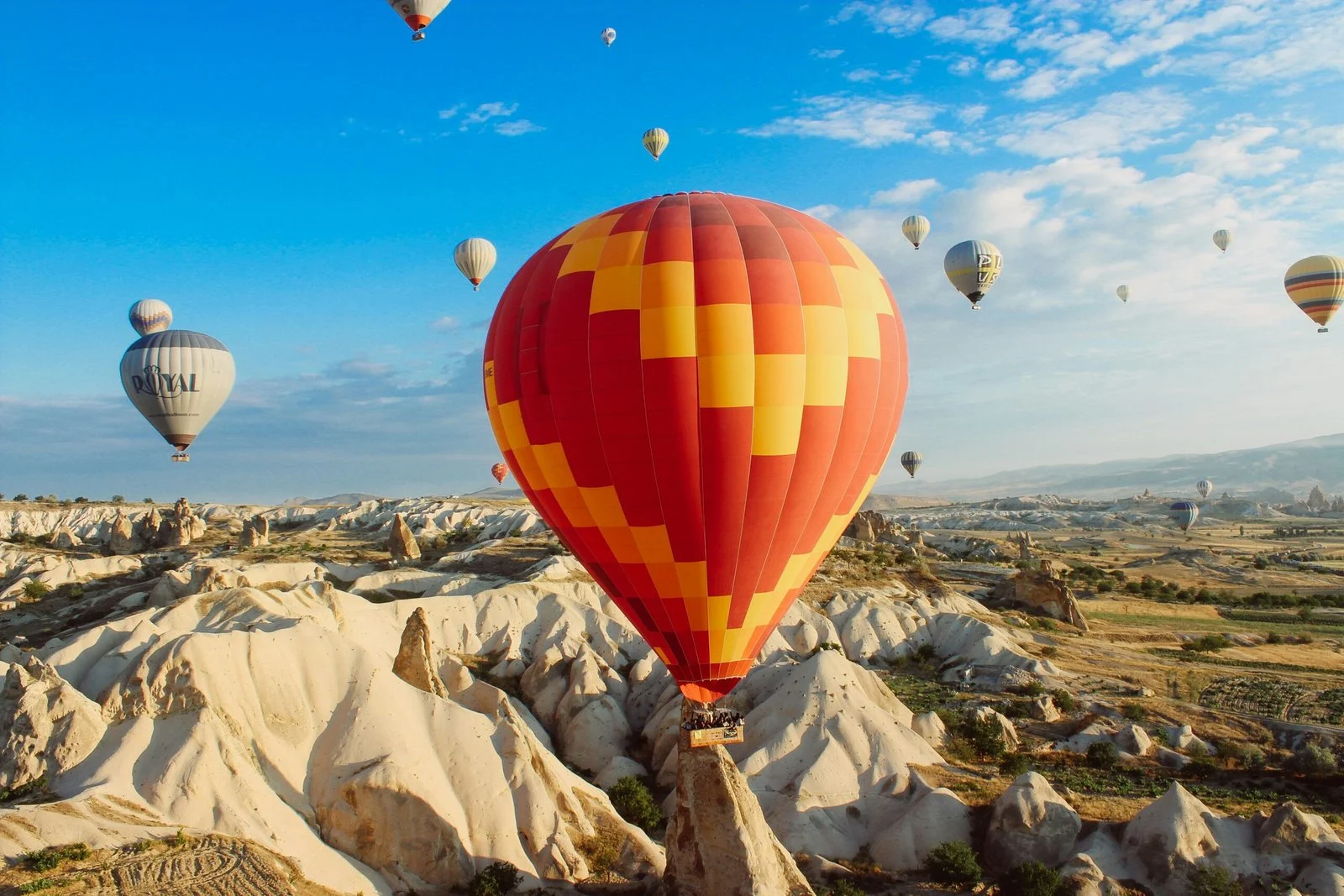
Cappadocia’s fairy chimneys and cave hotels feel magical year-round, but winter brings snow-dusted valleys and empty balloon baskets. Discover when to find quieter underground cities, warmer hospitality, and that iconic sunrise shot without the summer crowds.
Smart Travel Calendar
Shoulder Season
Your Smartest Windows
April to mid-June
September to late October
Avoid: The week of Kurban Bayramı (Eid al-Adha) – domestic tourists flood Cappadocia, cave hotels triple in price, and balloon companies sell out weeks in advance. Also avoid the November 10 (Atatürk Memorial Week) if you dislike patriotic tour groups.
What the Sky Does
Typical shoulder weather: 10°C to 24°C (50°F to 75°F)
April brings wildflowers and the “poppy explosion” across the valleys – red carpets between chimneys.
September offers the year’s clearest skies – balloon flights have 90%+ success rates.
Mornings are crisp (5-10°C / 41-50°F) – perfect balloon conditions, then warm afternoons.
October paints the vineyards and apricot orchards in gold and rust.
How Empty It Feels
40-50% fewer tourists vs peak July-August
Göreme Open Air Museum’s Dark Church – no queue, just peace.
Love Valley hike – you’ll pass maybe five people in two hours.
Sunrise viewpoints have space for your tripod without elbowing strangers.
Underground cities feel explorable, not claustrophobic.
What You’ll Save
30-40% on flights to Nevşehir (NAV) or Kayseri (ASR)
40-50% on cave hotels – that Sultan Cave Suites balcony room drops by half
Balloon flight prices dip 20-30% compared to August peak
Car rental is widely available and affordable – no advance booking panic
The Secret Perk
Valley wildflower explosion (April-May) – Rose Valley turns pink, Ihlara turns green.
Harvest season (September-October) – fresh grapes, apples, and apricots at roadside stands.
Pottery festival in Avanos – masters work outdoors in perfect temperatures.
Soft morning light for photography – no harsh summer shadows on the chimneys.
Local cave house tours – residents invite you in for çay when crowds are gone.
The Tiny Trade-Off
Some valley-floor restaurants in Ihlara close by 6 PM instead of 9 PM.
Early April can bring “toz” (dust storms from the plains) – pack a scarf.
Balloon flights may cancel 1-2 days per week (vs zero in peak summer).
The famous sunset horseback tours have fewer departure times.
Smart Traveler Tip
Visit between September 15 and October 15 for the clearest skies, harvest season, and best balloon weather.
For wildflowers and mild hiking, target the last two weeks of May – after spring rains, before summer heat.
Balloon flights operate best in the first hour after sunrise – book the earliest slot for calmest winds.
Deep Off-Season
Your Smartest Windows
November to March (excluding New Year’s week)
Avoid: December 30 – January 2 (New Year’s in Cappadocia) – cave hotels market “fairy tale New Year’s packages” at triple the price, and balloon companies charge peak rates. Also avoid the February school holidays (mid-February, one week) when Turkish families head to ski-adjacent Cappadocia.
What the Sky Does
Typical deep off-season weather: -5°C to 8°C (23°F to 46°F)
Snow dusts the fairy chimneys 5-10 times per winter – absolutely magical.
December and January are coldest – mornings often -5 to -10°C (23-14°F).
February brings clearer, drier air – higher balloon success rates than November.
Ihlara Valley creek freezes in places – stunning ice formations along the walls.
Underground cities stay a constant 13°C (55°F) – your warmest refuge.
How Empty It Feels
75-85% fewer tourists vs peak season
Göreme Open Air Museum feels post-apocalyptic – in the best way.
Derinkuyu underground city – you’ll hear your own footsteps eight levels down.
Sunrise at the famous viewing point – maybe two other photographers, not fifty.
Uçhisar Castle’s summit is yours alone for 360-degree snow views.
What You’ll Save
Up to 70-80% vs peak summer prices
Flights from Istanbul to Kayseri drop below €20 one way.
Cave hotel suites from €25-35 per night – some include fireplace and wine.
Balloon flights at 40-50% off summer rates – if they fly (check weather).
Car rental as low as €8/day – drive empty valleys without traffic.
The Secret Perk
Snow-covered fairy chimneys – the iconic photo you’ve never seen on Instagram.
Cave fireplace season – your hotel room becomes the cozy highlight of the trip.
Winter pottery workshops in Avanos – warm clay studios, intimate classes of two.
Hot wine and chestnuts – street vendors reappear with winter treats.
Real local life – villagers aren’t working; they’re drinking çay and inviting you in.
The Tiny Trade-Off
Balloon flights cancel frequently – 30-40% cancellation rate in January.
Hiking trails are muddy or icy – proper boots required, not sneakers.
40% of restaurants in Göreme close or reduce hours (November-March).
Daylight is short – sunrise at 7:30 AM, sunset at 4:45 PM.
Some hotel terraces (famous for sunrise photos) are too icy for furniture.
Smart Traveler Tip
Visit in early March for the best balance: snow still possible, but balloon flights are more reliable (70-80% success).
February is the quietest month overall and has the driest winter air – best for photography.
Book balloon flights for the morning of your second day – if canceled, you have a backup day.
Pack thermal base layers, waterproof boots, wool socks, and a real down jacket – Cappadocia winter is no joke.
Stay in Ürgüp rather than Göreme – more restaurants open, better wind shelter, and lower prices.
Find Off-Peak Flights
Uncrowded Experiences & Tours
Skip the lines and experience iconic landmarks at your own pace. Discover curated local tours and cultural activities designed to show you the authentic side of the destination without the peak-season rush.
Handy Tips
Weather & Climate
Cappadocia has a continental climate with four distinct seasons. Summers are hot and dry (can exceed 35∘C), and winters are cold and snowy (often below freezing). There is a significant temperature drop between day and night, so layering is essential, even in summer.
Local Customs And Etiquette
Hospitality: Turks are famously hospitable. Accepting an offer of çay (tea) is a sign of respect and a good way to connect with locals. It’s polite to accept a sincere offer of tea or food, even if you just take a small amount.
Mosques and Churches: Dress modestly when visiting religious sites. Women should cover their head, shoulders, and knees; men should avoid shorts. Always remove your shoes before entering a mosque.
Bargaining: In bazaars and for non-fixed-price items, polite bargaining is expected. In restaurants and shops with listed prices, it is not.
Budgeting For Your Trip
Accommodation: Hostels ($15–$35), mid-range cave hotels ($60–$120), luxury cave suites ($150+). Prices are significantly lower in the deep off-season.
Food: Street food/Budget ($3–$8), dinner at a mid-range restaurant ($15–$30 per person), fine dining ($40+).
Transport: Local Dolmuş (minibus) ($1–$3), shared airport shuttle ($10–$15), car rental ($30–$50/day).
Activities: Hot Air Balloon Ride ($150–$300+), Red/Green Tour ($35–$60, including lunch and sites), Museum Entry ($5–$15).
Daily Budget:
- Budget: $50–$80 (hostels, local food, public transport, free sites).
- Mid-range: $110–$180 (hotels, restaurants, guided tours).
- Luxury: $300+ (boutique hotels, gourmet meals, private tours, balloon ride).
Getting Around
By Car: Renting a car offers the most flexibility to explore the remote valleys and sites like Ihlara Valley at your own pace. Roads are generally in good condition.
By Tour: The pre-packaged Red and Green Tours are very popular, covering the main highlights efficiently with a guide and transportation included.
By Dolmuş: Shared minibuses are an affordable option for traveling between the main towns like Göreme, Ürgüp, and Avanos.
On Foot: The central valleys (Rose, Love, Pigeon) are best explored by walking or hiking.
Must-Try Food
Testi Kebab (Pottery Kebab): A rich stew of meat (lamb or beef) and vegetables slow-cooked in a sealed clay pot. The server dramatically cracks open the pot right at your table.
Mantı: Small, handmade Turkish dumplings typically filled with seasoned ground meat and served with a garlic yogurt sauce and a drizzle of melted butter and spices.
Gözleme: A savory, thin Turkish flatbread that is folded and cooked on a sac (a round griddle), often filled with cheese, spinach, potato, or minced meat.
Kuru Fasulye: A hearty, slow-cooked white bean stew, often made with tomato paste and sometimes pieces of Turkish dried beef (pastırma).
Kabak Çiçeği Dolması: Stuffed zucchini flowers, a delicate and seasonal dish filled with spiced rice, a local specialty.
Mercimek Köftesi: Vegetarian lentil balls mixed with fine bulgur, spices, and fresh herbs, served cold as an appetizer.
Yaprak Sarma: Vine or cabbage leaves tightly wrapped and stuffed with a seasoned mix of rice, currants, and herbs, served with a squeeze of lemon.
Kuru Kaymak (Dried Cream): A regional delicacy from the Kaymaklı village—a firm, dried cream often served with honey or molasses.
Kabak Tatlısı: A traditional Turkish dessert of pumpkin (or squash) that is candied and then served with walnuts or the local kuru kaymak.
Aşure (Noah’s Pudding): A sweet, mixed pudding made with grains, legumes, fruits, and nuts, often prepared for special occasions.
Must-Try Drinks
Cappadocia Wine: The region has a winemaking tradition dating back to the Hittites. Try wines made from local grapes like the white Emir and red Öküzgözü.
Ayran: A refreshing, chilled, savory drink made from yogurt, water, and salt—a staple with Turkish meals.
Turkish Coffee: Strong, thick, and served black. The grounds are left in the cup, and after drinking, the leftover sludge is sometimes used for fortune-telling.
Çay (Turkish Tea): Served everywhere, all day, in small, tulip-shaped glasses. It is a sign of hospitality and is an integral part of daily life.
Sahlep: A creamy, hot drink made from milk, sugar, and cinnamon, traditionally thickened with flour from orchid roots—a popular winter warmer.
Şalgam Suyu: A unique, non-alcoholic savory and sour drink made by fermenting black carrots and turnips, often served cold with hot pepper flakes.