 Skip to content
- Is Frankfurt Too Cold And Grey For Sightseeing In The Off-Season?
Yes, winter brings cloudy skies, chilly winds, and occasional rain that can make the skyscrapers look bleak. However, Frankfurt's modern energy actually works well indoors, and you will explore the historic Römer square and the museums along the Main River with up to 70% fewer tourists crowding your path.
The real drawdown is that the outdoor apple wine taverns and river cruises shut down or become unappealing. To Exploit Travel Seasonality, dive into Frankfurt's incredible museum mile, from the Städel Art Museum to the Natural History Museum, plus enjoy hotel rates near the Hauptbahnhof at discounts of 30% to 45% compared to summer trade fair peak prices.
- Can I Still Visit The Fairy Tale Castles Of The Brothers Grimm In Hesse During The Off-Season?
Absolutely, and the moody weather actually makes the fairy tales feel more authentic. You can tour the Sleeping Beauty Castle of Sababurg and the Rapunzel Tower in Trendelburg with almost no other visitors, imagining the stories exactly as the Grimm brothers collected them from local villagers.
The trade-off is that the castle gardens lose their summer bloom and the outdoor adventure trails close. Instead of chasing outdoor exhibits, focus on the warm indoor museums dedicated to the Brothers Grimm in Steinau and Hanau, then warm up with a hot chocolate in a half-timbered tavern, often at 15% to 25% lower prices than summer.
- How Do I Get Between Frankfurt, Wiesbaden, And The Rhine Valley When The Weather Is Unpredictable?
Yes, the regional train network connecting Hesse's major cities runs reliably and frequently year-round. You can easily zip from Frankfurt to Wiesbaden in under an hour, or from Wiesbaden down to the Rhine Valley towns like Rüdesheim, always finding a seat with none of the summer crowding.
The main drawback is that the cable cars up to the Niederwald Monument and some riverboat cruises stop running in winter. The smart solution is to buy the Hessenticket for unlimited regional travel, often at 20% to 30% lower than summer transport passes, then use trains and local buses to reach hilltop viewpoints without driving stress.
- Are The Famous Thermal Spas Of Wiesbaden And Bad Homburg Worth Visiting In The Off-Season?
Yes, and honestly, winter is the absolute best time for thermal bathing in Hesse. You can soak in Wiesbaden's hot mineral waters at the Kaiser-Friedrich-Therme while cold air hits your face, an experience that summer visitors completely miss, plus the elegant spa architecture feels even more grand in winter light.
The downside is that the outdoor sunbathing areas and rooftop pools are less appealing on freezing days. However, you can Exploit Travel Seasonality by booking a spa package at a fraction of summer prices, often with discounts of 25% to 40%, then spend a full rainy day moving between saunas, steam rooms, and heated pools without ever feeling rushed or crowded.
- Is Central Germany Worth Visiting In The Off-Season If I Miss The Famous Christmas Markets?
Absolutely, because January through March offers a completely different, quieter version of Hesse. You will walk through the UNESCO World Heritage site of the Bergpark Wilhelmshöhe in Kassel with almost no one else around, and the half-timbered medieval town of Marburg feels like a private time capsule.
The realistic drawback is that the festive atmosphere, mulled wine stalls, and outdoor ice skating rinks of December disappear. To Exploit Travel Seasonality, focus on the incredible castle interiors and museums instead, like the Schloss Wilhelmshöhe with its famous Rembrandt collection, all while enjoying accommodation discounts of 35% to 50% and flight prices that are often the cheapest of the entire year into Frankfurt Airport.

Home > Exploit The Seasons > Seasonal World Map > Europe > Germany > Hesse And Central Germany
HESSE & CENTRAL GERMANY
Hesse sheds its tourist crowds between seasons, revealing fairy-tale half-timbered towns and the Rhine’s quietest bends. This guide unlocks Central Germany’s best-kept secret: authentic moments when value is highest and the magic feels yours alone.
Smart Travel Calendar
Why Visit Hesse & Central Germany?
Skip the Rhine river cruise crowds and have medieval castle views completely to yourself.
Walk the fairy-tale streets of Fritzlar or Marburg without elbowing through selfie sticks.
Save up to 40% on Frankfurt hotels while still enjoying world-class museums in peace.
Shoulder Season
Your Smartest Windows
Mid-April to mid-June
Mid-September to late October
Avoid: The two weeks of Frankfurt Buchmesse (Frankfurt Book Fair, mid-October) when hotels citywide triple in price; also avoid the week of documenta (every five years, June-July) in Kassel for art crowds.
What the Sky Does
April/May & Sept/Oct: 8°C to 20°C (46°F to 68°F) – crisp mornings, mild afternoons
April showers are real but brief – they leave the Spessart forest smelling like wet earth and wild garlic
September brings “Altweibersommer” (old women’s summer) – weeks of golden, hazy, warm light
By October, mist clings to the Taunus hills by dawn but burns off by 10 am
How Empty It Feels
40-60% fewer tourists than July/August
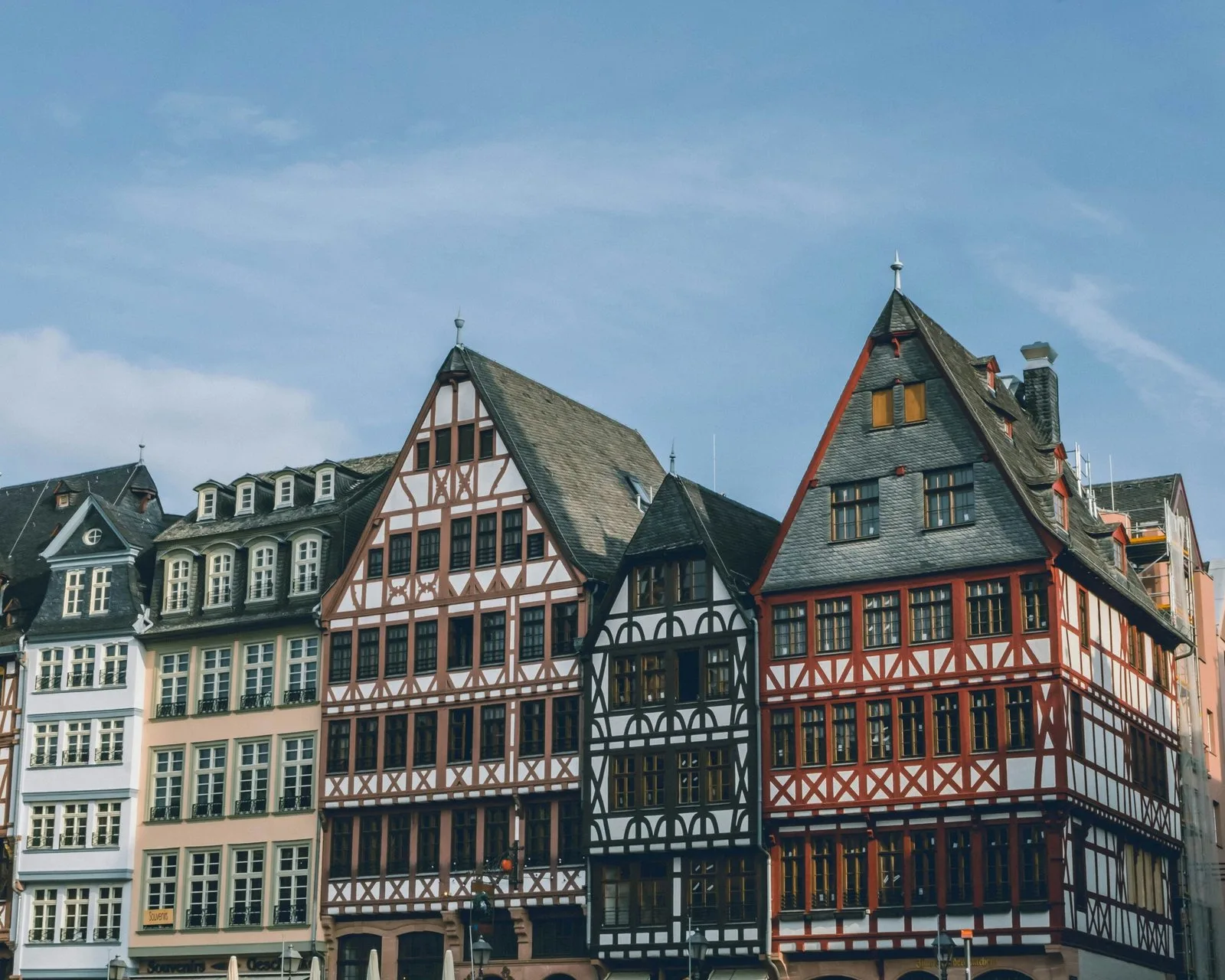
Frankfurt’s Römerberg square feels spacious; no queues for the Main Tower elevator
The Rhine’s Lorelei viewpoint: park easily, linger as long as you like
Bergpark Wilhelmshöhe in Kassel: find a bench for the waterfall without sharing
What You’ll Save
30% on flights to Frankfurt Airport and 25-35% on 4-star hotels
Car rental from Frankfurt is nearly half the summer price
Skip-the-line tickets rarely needed – just walk into the Städel Museum
Outdoor cider gardens are still open, with no “peak season” surcharge
The Secret Perk
Wine festivals along the Hessian Bergstraße in September – tiny, local, no reservation needed
Wild garlic (Bärlauch) season in April – forests smell like garlic; try it in local dumplings
The golden hour over the Edersee dam lasts twice as long under autumn skies
Chat with Kellerwald rangers on near-empty hiking trails – they have time to talk
The Tiny Trade-Off
Some castle interiors (like Burg Frankenstein) reduce hours or close on weekdays
Swimming in the Edersee or Rhine is too cold before June
The “Sesselbahn” chairlifts in the Rhön mountains run weekends only in May/October
Early October can still see a brief price bump during German Unity Day (Oct 3)
Smart Traveler Tip
Target the last two weeks of September – perfect weather, harvest season, and all attractions open
Start your days early: October mornings are misty and magical, often clearing by 11 am
For the best balance of low prices and mild weather, go mid-May or late September
Avoid late April if you dislike rain – pack a good waterproof jacket and embrace the green
Deep Off-Season
Your Smartest Windows
Early November to mid-December (before the first Advent weekend)
Mid-January to end of February
Avoid: The week between Christmas and New Year’s Eve (Dec 27-Jan 1) when Frankfurt’s airport and hotels fill with holiday travelers, and the Rheingau Christmas markets bring regional crowds.
What the Sky Does
-2°C to 6°C (28°F to 43°F) – expect frost, fog, occasional snow, and gray skies
January is coldest; the Rhön mountains often get a reliable snow blanket
Frankfurt and the Rhine valley stay milder but grayer – fog is common until noon
Rainfall is lowest in February, but humidity makes the cold feel sharper
How Empty It Feels
70-80% fewer tourists than summer – especially outside Frankfurt
Walk through the UNESCO World Heritage site of Lorsch Abbey as the only visitor
Museums in Wiesbaden and Darmstadt feel like private viewings
Small towns like Michelstadt or Seligenstadt are genuinely local – no English heard in bakeries
What You’ll Save
Up to 50% off peak season rates for flights and hotels
Frankfurt 5-star hotels from €100-120 per night (vs €250+ in summer)
Car rental as low as €15-20/day, even with winter tires included
Thermal spas offer winter “wellness days” at half the summer resort price
The Secret Perk
Cozy up in a traditional “Besenschänke” (broom tavern) in the Spessart – open only in winter
Thermal baths of Bad Orb or Bad Nauheim – outdoor pools steaming in the snow
Winter hiking on cleared trails in the Kellerwald-Edersee National Park – silent, snowy, sublime
January is venison season – try local wild boar or red deer in rustic inns for a few euros
Learn to make green sauce (Grüne Soße) from a Frankfurt Oma – she’s bored and happy to teach
The Tiny Trade-Off
Rhine river cruise boats stop running November to mid-March (except a few weekend trips)
Nightlife in smaller cities like Giessen or Fulda is very quiet – students are gone
Many forest hiking trail cafés (Waldgaststätten) close entirely until March
Daylight is short: sunrise 8:15 am, sunset 4:30 pm in December
Smart Traveler Tip
Visit Christmas markets (late Nov–Dec 23) for magic, then leave before New Year’s prices spike
February is the quietest month – coldest, but also driest and most peaceful
Late February to early March brings “Fasching” (carnival) – lively but local, especially in Mainz (just outside Hesse)
Pack layers, gloves, and waterproof boots – fog and damp cold feel colder than the thermometer says
For mildest deep off-season, stick to the Rhine valley near Rüdesheim – it stays a few degrees warmer
Find Off-Peak Flights
Uncrowded Experiences & Tours
Skip the lines and experience iconic landmarks at your own pace. Discover curated local tours and cultural activities designed to show you the authentic side of the destination without the peak-season rush.
Handy Tips
Weather & Climate
Hesse has a moderate continental climate. Summers (June-August) are warm with average highs of 22−25∘C (72−77∘F). Winters (December-February) are cold, with average lows just below freezing. The mountain areas like the Rhön and Vogelsberg are generally cooler, with reliable snow for winter sports.
Local Customs And Etiquette
Language: German is the official language. English is widely spoken, especially in Frankfurt and among younger people. Learning a few basic German phrases is always appreciated.
Punctuality: Germans are generally very punctual. If you are meeting someone or attending a tour, aim to arrive on time or a few minutes early.
Tipping: Tipping is customary in restaurants and for service staff. A simple way is to round up the bill or add 5-10% for good service.
Budgeting For Your Trip
Accommodation: Hostels ($30–$60), mid-range hotels ($90–$150), luxury ($180+). Prices are significantly higher in Frankfurt during major trade fairs.
Food: Fixed-price lunch menu (Mittagsmenü) ($15–$25), dinner at a mid-range restaurant ($30–$50 per person), fine dining ($70+).
Transport: Car rental ($40/day), local public transport day ticket in Frankfurt ($8–$12).
Activities: Museum entry ($10–$20), Rheingau wine tasting tours ($20+).
Daily Budget:
- Budget: $80–$120 (hostels, small food stalls/supermarket, public transport).
- Mid-range: $140–$220 (hotels, mid-range restaurants, attractions).
- Luxury: $250+ (boutique hotels, gourmet meals, private tours).
Getting Around
By Train: Germany’s high-speed and regional rail network (Deutsche Bahn) is excellent, efficiently connecting major cities like Frankfurt, Kassel, and Marburg.
By Car: A car is the best way to explore the rural areas, like the Vogelsberg or the Rheingau wine villages, but is unnecessary and expensive in city centers.
By Public Transport: Frankfurt has a well-developed subway/train system (S-Bahn/U-Bahn). Regional buses connect smaller towns to the rail hubs.
Must-Try Food
Frankfurter Grüne Soße (Green Sauce): A cold sauce made with seven fresh herbs, often served with boiled eggs and potatoes or with Frankfurter Schnitzel.
Handkäse mit Musik: A strong-smelling, marinated sour milk cheese served with onions and caraway seeds, typically accompanied by Apfelwein. The “music” refers to the digestive sounds.
Frankfurter Würstchen: The original small, boiled pork sausages that must be made in the Frankfurt area to carry the name.
Ahle Wurscht: A specialty of Northern Hesse, this is a slowly-matured, air-dried pork sausage with a unique, rustic flavor.
Frankfurter Rippchen: Cured, smoked pork cutlets that are gently braised, traditionally served with sauerkraut and mashed potatoes.
Spundekäs: A creamy mixture of fresh cheese, quark, paprika, and onions, often served as a spread with pretzels or bread.
Frankfurter Kranz: A decadent, ring-shaped layer cake symbolizing a crown, typically made with a sponge base, buttercream, and garnished with brittle nuts (often Krokant).
Bethmännchen: Small, marzipan-based cookies from Frankfurt, decorated with three almond halves, traditionally a Christmas favorite.
Apfelkuchen (Apple Cake): A classic German dessert, usually a simple, moist cake topped with sliced apples and cinnamon.
Schneegestöber: A creamy spread made from camembert, butter, cream cheese, and spices, served with dark bread.
Must-Try Drinks
Apfelwein (Ebbelwoi): Hesse’s national drink—a tart, alcoholic apple cider. It is traditionally served in a stoneware pitcher (Bembel) and poured into a ribbed glass (Geripptes).
Riesling: The signature white wine of the Rheingau, ranging from dry (Trocken) to sweet dessert wines.
Sauergespritzter: A very popular local mixed drink, combining Apfelwein with sparkling water.
Süßgespritzter: Apfelwein mixed with lemonade (like Sprite), which is a sweeter option.
Rheingauer Spätburgunder: Pinot Noir from the Rheingau region, a high-quality red wine.
Kirschwasser: A clear, colorless fruit brandy made from double-distilled sour cherries, often served after a meal.
Bier (Beer): While Apfelwein is king, local beers like a light Pilsner or the regional Kölsch (from nearby Cologne) are widely available.
Apfelschorle: A non-alcoholic, refreshing mix of apple juice and sparkling water.
Traubensaft (Grape Juice): Fresh, local grape juice from the wine regions during harvest season.