 Skip to content
- Will My Overwater Bungalow Vacation Be Washed Out By Rain In The Off-Season?
No, not at all. French Polynesia's off-season (Sept-Nov, Feb-May) is the "warmer wet season," but rain typically arrives as brief, dramatic tropical showers that pass within an hour, leaving behind vibrant rainbows and even more stunning lagoon colors. The real change is higher humidity and warmer air, which makes swimming in your private bungalow ladder absolutely delightful.
The drawdown is that the ocean can be slightly rougher on the outer reef passes, and a few afternoons might be cloudier. However, to "Exploit Travel Seasonality," you will discover that those short rain bursts are the perfect excuse for a spa treatment or a romantic lunch. The mornings are almost always spectacularly sunny and calm.
- Can I Really Afford Bora Bora During The Low Season?
Yes, you can finally say "yes" to that bucket-list trip. Overwater bungalow rates across Bora Bora, Moorea, and Taha'a drop by 35% to 55% during the off-season. Many high-end resorts also offer "stay 5, pay 4" promotions or include breakfast and dinner packages that would cost a fortune from June to August.
Domestic flights between islands also see discounts of 20-30%, making island hopping much more accessible. The only downside is that a few smaller family-run pensions on remote atolls may close for a month
- Is The Water Still That Perfect Shade Of Blue When It Is Cloudy?
Yes, and it might actually look even more magical. The famous turquoise and cobalt blues of lagoons like Bora Bora's or Rangiroa's are created by coral sand and sunlight filtering through shallow water, so they remain stunning even on partly cloudy days. In fact, dramatic clouds overhead create incredible reflections and photo opportunities that bright, flat sunlight cannot match.
The real drawdown is that snorkeling visibility can drop slightly for a day or two after heavy rain near river mouths on the main island of Tahiti. But on the smaller motus (islets) and atolls, the water stays crystal clear. You can truly "Exploit Travel Seasonality" by capturing those moody, artistic lagoon shots that no postcard ever shows.
- Won't The South Pacific Humidity Be Completely Uncomfortable?
Yes, the humidity is higher, but "completely uncomfortable" is an exaggeration. Think of it like Hawaii or the Caribbean in summer: you will want air conditioning for sleeping and a midday shower to refresh. However, the constant trade winds across French Polynesia's islands keep the air moving, making it far more bearable than a humid city like Singapore or Houston.
The beautiful trade-off is that the ocean and pool temperatures are wonderfully warm (around 28°C / 82°F) all season long. You also get to experience the vibrant Heiva i Tahiti festival in July, which is actually the peak of the dry season.
- Are The Famous Sharks, Rays, And Coral Still Easy To See In The Off-Season?
Yes, the marine life is actually more active and abundant. The warmer water temperatures during French Polynesia's off-season encourage plankton growth, which means manta rays, reef sharks, and humpback whales (August to October is their peak, overlapping the dry season) are still very present. Coral spawning often occurs during these months, creating a spectacular underwater event.
The only drawdown is that a few days of rougher ocean conditions might cancel boat trips to the most exposed outer reef passes. But inside the protected lagoons of Bora Bora, Moorea, or Huahine, snorkeling and shark-feeding excursions run almost daily.

Home > Exploit The Seasons > Seasonal World Map > Oceania > French Polynesia
FRENCH POLYNESIA
Beyond the overwater bungalow fantasy lies a Tahiti few see: quiet lagoons, local markets, and genuine mana. Discover when to chase humpback whales, dodge the Australian winter rush, and find paradise without the premium.
Smart Travel Calendar
Why Choose French Polynesia Off-Season?
Lagoons with less wake. No jet skis circling – just you, a stingray, and silence.
Whale season magic. July to November is peak viewing, but off-season means uncrowded boats.
Vanilla rains. Short tropical showers make the mountains impossibly green.
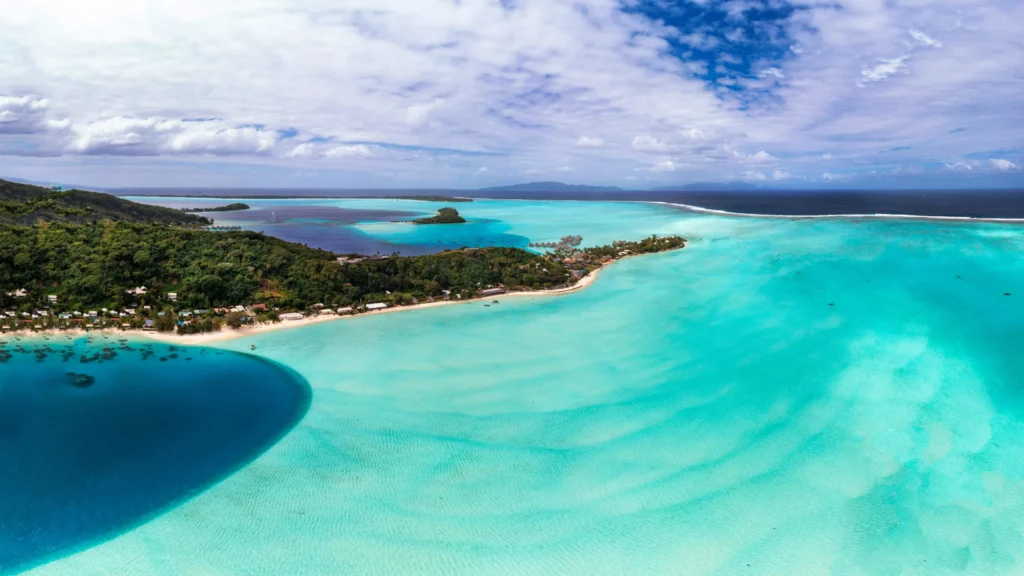
Heiva without the crowds. June/July festival energy, but February’s dance practice is just for locals.
Bungalows at half price. That iconic overwater stay becomes almost reasonable.
Real Papeete. The capital feels local, not like a cruise ship terminal.
Shoulder Season
Your Smartest Windows
April to May
September to October
Avoid: The Heiva festival (entire month of July – massive local and French tourist crowds) plus the Australian/French school summer holidays (mid-December to early January & all of July).
What the Sky Does
Typical weather: 24°C to 30°C (75°F to 86°F) – warm and humid.
April & May: end of rainy season – mornings fresh, afternoons partly sunny.
September & October: start of dry season – lower humidity, steady trade winds.
Passing showers last 15-20 minutes, then the sun returns fast.
How Empty It Feels
40-50% fewer tourists than peak July/December rush.
Bora Bora’s Matira Beach has space to spread your towel without neighbors.
Moorea’s Belvédère lookout has no queue for that famous photo.
Ferry between Tahiti and Moorea has empty seats and no standing room stress.
What You’ll Save
30-50% on overwater bungalows and 20-30% on flights from Los Angeles/Paris.
Car rentals on Moorea or Tahiti often include a free day with weekly bookings.
Lagoon tour boats run anyway – you’ll share with 4 people instead of 14.
Many resorts offer “shoulder season” packages with breakfast and dinner included.
The Secret Perk
Humpback whales arrive early September – watch mothers and calves from a quiet boat.
Breadfruit and mango season – local rotisserie chicken stands add free fruit plates.
Tiki village carvings – artists have more time to chat about their craft.
Golden hour lasts longer – lower humidity means clearer skies for lagoon photography.
Pension family dinners – you’ll eat with hosts, not a buffet of strangers.
The Tiny Trade-Off
One or two afternoon showers – pack a light poncho and embrace it.
Some smaller island pensions close for 2-3 weeks in April – always check ahead.
Nightlife is very quiet – Papeete’s bars are local, not party scenes.
No big festivals (unless you catch April’s Billabong surf contest – then prices spike locally).
Smart Traveler Tip
Target late September to mid-October for the absolute sweetest spot: dry weather + whales + low crowds.
Fly Tuesday through Thursday – Tahiti Faa’a Airport is calm, and upgrades happen.
Book Bora Bora first – it fills faster than Tahiti or Moorea even in shoulder.
Avoid the first week of May (French Labor Day holiday) – domestic travel spikes.
Deep Off-Season
Your Smartest Windows
November (early half – before French holidays)
February to March
Avoid: The Christmas/New Year fortnight (December 20–January 5) plus the full month of July (Heiva festival – highest prices and crowds of the entire year).
What the Sky Does
Warm and wet: 25°C to 31°C (77°F to 88°F) with high humidity (80%+).
Expect short, heavy tropical downpours (often late afternoon) followed by steaming sun.
The Austral Islands (south) get more rain; the Tuamotus (Rangiroa) stay drier.
Cyclone risk is low but real – most storms pass north of the Society Islands.
How Empty It Feels
70-80% fewer tourists than July’s Heiva madness.
Bora Bora’s main lagoon feels like a private pool – you’ll count on one hand the other boats.
The Paul Gauguin Museum in Tahiti: you and the guardian only.
Local ferries feel residential – families going to market, not Instagrammers.
What You’ll Save
50-65% off overwater bungalow rates – luxury becomes affordable.
Flights from Los Angeles often drop to 45% below July prices.
High-end resorts (Four Seasons, St. Regis) run “rainy season specials” with free nights.
Private lagoon charters cost the same as shared tours in peak – negotiate a longer tour.
The Secret Perk
Vanilla plantations in full bloom (February-March) – Taha’a smells incredible.
Poisson cru cooking classes – locals have hours to teach you their family recipe.
No booking required for anything – decide that morning which island to explore.
Black pearl market bargains – sellers are motivated when cruise ships aren’t docking.
Real village life – you’ll watch rugby matches and attend church with neighbors.
The Tiny Trade-Off
Some outer island guesthouses close entirely (February-March for annual break).
A few restaurant kitchens in smaller villages reduce hours (lunch only on weekdays).
Mosquitoes are more active after rain – pack serious repellent.
Daylight is slightly shorter (sunset ~6:15pm vs 7:30pm in summer).
Smart Traveler Tip
February is the absolute cheapest month – but March has slightly better weather and the same low prices.
Stick to the Tuamotus (Rangiroa, Fakarava) – they’re drier year-round than the Society Islands.
Buy trip interruption insurance – just in case a tropical depression forms.
Pack a waterproof backpack and quick-dry clothes – you’ll get caught in one downpour daily.
Find Off-Peak Flights
Uncrowded Experiences & Tours
Skip the lines and experience iconic landmarks at your own pace. Discover curated local tours and cultural activities designed to show you the authentic side of the destination without the peak-season rush.
FAQs
Essential Trip Information
Visa and Entry Requirements
French Polynesia is an overseas collectivity of France, so entry requirements are similar to mainland France.
For U.S. travelers: No visa is required for stays of 90 days or less for tourism.
Passports must be valid for at least six months beyond the date of arrival.
Immigration may ask for proof of onward travel and accommodation bookings.
Currency
The official currency is CFP Franc (XPF). However, U.S. Dollars (US$) are widely accepted in tourist areas.
Currency exchange: Most hotels and some businesses will exchange U.S. Dollars, but exchange rates can vary.
Best Ways to Handle Currency:
Before Your Trip: Exchange a small amount of currency, and use ATMs for better rates once you’re in French Polynesia.
During Your Trip: Use ATMs at major banks (e.g., Bank of Tahiti) for local currency (CFP), and credit/debit cards (Visa, Mastercard) are accepted in many places.
Carry cash (US$ or CFP) for small vendors or in more remote areas.
What to Avoid:
Avoid currency exchange kiosks with high fees.
Language
French is the official language, but Tahitian is widely spoken.
Helpful phrases: “Ia ora na” (Hello), “Mauruuru” (Thank you), “O te manihini?” (Where is…?)
Safety & Security
Generally safe for tourists, but caution is advised at night in more remote areas.
Always keep an eye on your belongings in busy tourist spots.
Emergency number: 18 (police), 15 (medical).
Health & Insurance
No special vaccinations required.
Travel insurance is recommended.
Pharmacies (e.g., Tahiti Pharmacies) are available in major towns. Tap water is safe to drink in most areas.
Transportation
Public transportation: Limited to small buses and shuttles in major towns.
Bicycles/Scooters: Rent for an easy way to explore.
Taxis: Available in Tahiti, but more limited in smaller islands. Ride-sharing services are rare.
Price Level
French Polynesia can be expensive, particularly in popular areas like Tahiti and Bora Bora.
Accommodation:
Budget: Hostels or budget hotels ($70–150/night)
Mid-range: 3-star hotels ($200–350/night)
Luxury: Overwater bungalows and 4-5 star hotels ($500+/night)
Food:
Quick eats: Street food (Poisson cru, Taro dishes) ($8–20)
Casual dining: Seafood restaurants ($25–50/person)
Fine dining: High-end resorts ($60+/person)
Drinks:
Beer: $4–8 at bars, $2–5 at supermarkets
Cocktails: $10–20
Transportation:
Local buses: $1–2 per ride
Taxis/Ride-sharing: $15–40 for short trips
Bike rentals: $10–20/day
Money-Saving Tips:
Explore public beaches and hikes for free.
Shop at local markets for affordable meals and souvenirs.
Take advantage of free activities like swimming and snorkeling at public beaches.
Planning Your Trip
Local Customs And Etiquette
French Polynesia is known for its warm and welcoming people. Respecting local traditions is appreciated.
Greetings:
- A traditional greeting is the “Ia Ora Na” (Hello) or “Manava” (Welcome).
- Handshakes are common in more formal settings, while cheek kisses (on both cheeks) are a typical greeting among friends.
Dress Code:
- Casual attire is fine for most activities, but bring dressier clothes if dining at high-end resorts.
- In religious sites, like churches, modest dress is expected.
Tipping:
- Tipping is not customary, but appreciated for good service. Consider leaving 5–10% at restaurants.
Island Time:
- Things tend to move at a slower pace, so relax and embrace the laid-back atmosphere.
Budgeting For Your Trip
French Polynesia is a premium destination, but with planning, it can be enjoyed on different budgets.
Accommodation:
- Budget (guesthouses): US$50–150 per night.
- Mid-range (3-4 star resorts): US$250–500 per night.
- Luxury (5-star resorts): US$800+ per night.
Food:
- Street food or casual eateries: US$10–20 per meal.
- Mid-range restaurants: US$30–50 per person.
- Fine dining at resorts: US$75+ per person.
Transport:
- Local buses and ferries: US$5–20.
- Car rentals: US$40–70 per day.
- Domestic flights: US$100–250 per flight.
Activities:
- Snorkeling/Diving: US$50–100.
- Cultural tours or boat trips: US$50–150.
Daily Budget:
- Budget: US$100–150 (guesthouses, street food, public transport).
- Mid-range: US$250–450 (resorts, sit-down meals, local tours).
- Luxury: US$500+ (luxury resorts, private tours, fine dining).
Internet & Mobile
Staying connected in French Polynesia can be tricky, but there are options.
Free Wi-Fi:
- Available in most hotels and cafes, though connection speeds may be slower on remote islands.
SIM Cards:
- You can purchase SIM cards from Vodafone or Orange at the airport or local shops. Expect to pay around US$20–30 for a plan with 5GB of data.
- Tip: Check for coverage in remote areas before relying on mobile data.
eSIMs:
- Supported by major providers, but coverage can be spotty outside major islands.
Travel Insurance
Travel insurance is strongly recommended for a trip to French Polynesia due to its remote location and adventure activities.
Recommended for:
- Medical coverage (especially for remote islands).
- Trip delays (weather can occasionally affect flights).
U.S. Healthcare: Medical services can be expensive and limited in remote areas. Make sure your insurance covers evacuation or treatment abroad.
Adventure Activities: Some policies may exclude coverage for activities like parasailing or scuba diving, so check with your insurer.
Accomodation Options
French Polynesia offers a variety of accommodation, from luxury resorts to more affordable guesthouses.
Luxury:
- Overwater bungalows are a signature experience in French Polynesia. Resorts like The St. Regis Bora Bora and InterContinental Bora Bora offer high-end stays with private beaches and world-class amenities.
- Tip: Expect rates starting around US$800 per night.
Mid-range:
- For more affordable luxury, consider Hilton Moorea Lagoon Resort or Le Méridien Tahiti. Prices range from US$250–500 per night.
Budget:
- Guesthouses and Pension-style accommodations are common and provide an authentic experience at lower rates (US$50–150 per night).
- Popular budget options include Pension de la Plage in Moorea or Auberge Tupuna in Tahiti.
Airbnb/VRBO:
- Great for independent travelers, especially for stays in smaller islands. Prices can range from US$100–300 depending on the property.
Getting Around
Getting around the islands can vary depending on the location and the specific island you’re visiting.
Inter-island flights:
- Air Tahiti offers regular flights between islands (e.g., Bora Bora, Moorea, Tahiti).
- Flights are relatively short (30–60 minutes), but can be expensive.
- Book flights in advance for better pricing.
Boats/Ferries:
- Ferries connect Tahiti with Moorea and some other smaller islands.
- Private boats are available for hire and are a great way to explore the more remote islands.
Taxis/Private Transfers:
- Taxis are available on most islands, but they can be expensive.
- Tip: Consider renting a car for longer stays on islands like Tahiti or Moorea.
Biking/Scooters:
- Popular on Moorea, where you can rent a scooter or bike to explore the island.
Walking:
- Many resorts and smaller islands are walkable, especially for short distances.