 Skip to content
- Does The Maldives Rain All Day During The Off-Season Or Can I Still Sunbathe?
You can definitely still sunbathe, just pack a little patience. The Maldives' wet season (May to October) rarely means full-day washouts. Instead, you get short, dramatic tropical downpours that last an hour or two, followed by the sun breaking through to warm up your private pool deck again.
The upside is genuinely incredible. By visiting during these months, you can stay in an overwater bungalow that normally costs a fortune for up to 60% less, and you will often have a sandbar completely to yourself between rain showers. Check our Off-Season Calendar to time your arrival for the best weather windows.
- How Much Cheaper Is A Luxury Resort During The Maldives Low Season?
The discounts are absolutely massive. Resort prices drop by 40% to 55% between May and October, with many properties throwing in "free night" promotions and complimentary seaplane transfers just to fill rooms. You essentially get a five-star honeymoon experience for a three-star budget.
Yes, and the value extends beyond the room. Water sports, spa treatments, and private dining on the beach often come with early booking discounts of 25% to 35% during this period.
- Will The Rough Seas Ruin My Boat Trips And Diving Plans?
Not at all, but you need to know which atoll to choose. While the western-facing atolls experience rougher swells during the wet season, the eastern atolls (like Male and Ari) remain perfectly diveable. In fact, the plankton-rich waters attract massive manta rays and whale sharks in higher numbers than the dry season.
The trade-off is real but manageable. You might feel some motion on longer speedboat transfers, but seaplanes still operate normally. And for scuba divers? The reduced sunlight means better visibility for spotting pelagic species.
- Are The Resorts Empty Or Do They Close Down Completely?
They are gloriously uncrowded, not closed. Unlike some Caribbean destinations, Maldivian resorts operate year-round. You will find staff-to-guest ratios that feel almost absurd, with pool attendants and butlers competing to serve you because occupancy drops by nearly 60% from peak season numbers.
The downside is worth understanding. Some budget guesthouses on local islands might shutter for maintenance, and a few ultra-luxury properties reduce their restaurant options from five to three. But the resorts that stay open? They roll out the red carpet harder to keep their best staff employed.
- Will The Humidity And Mosquitoes Make The Trip Uncomfortable?
Yes, the humidity is real, but modern resorts have mastered it completely. Every villa comes with powerful air conditioning that turns your room into a crisp sanctuary, and the ocean breeze on your private deck keeps things bearable. You will adapt faster than you think.
Regarding mosquitoes, the off-season actually brings fewer than the transitional months. Resorts fog their islands daily and provide plug-in repellents in every villa. Plus, the afternoon rains wash away standing water where mosquitoes breed.

Home > Exploit The Seasons > Seasonal World Map > Asia > Maldives
MALDIVES
Forget the postcard crowds. The Maldives off-season unlocks crystal-clear skies after morning rain, vibrant local culture, and deserted sandbars at half the price of dry season perfection.
Smart Travel Calendar
Why Choose Maldives Off-Season?
Lower prices, same paradise: Luxury resorts drop rates by 40-60% while the Indian Ocean stays warm.
Surf’s actually up: The southwest monsoon brings consistent waves—perfect for surfers chasing barrels.
Private sandbar moments: With fewer tourists, you’ll feel like Robinson Crusoe on deserted islands.
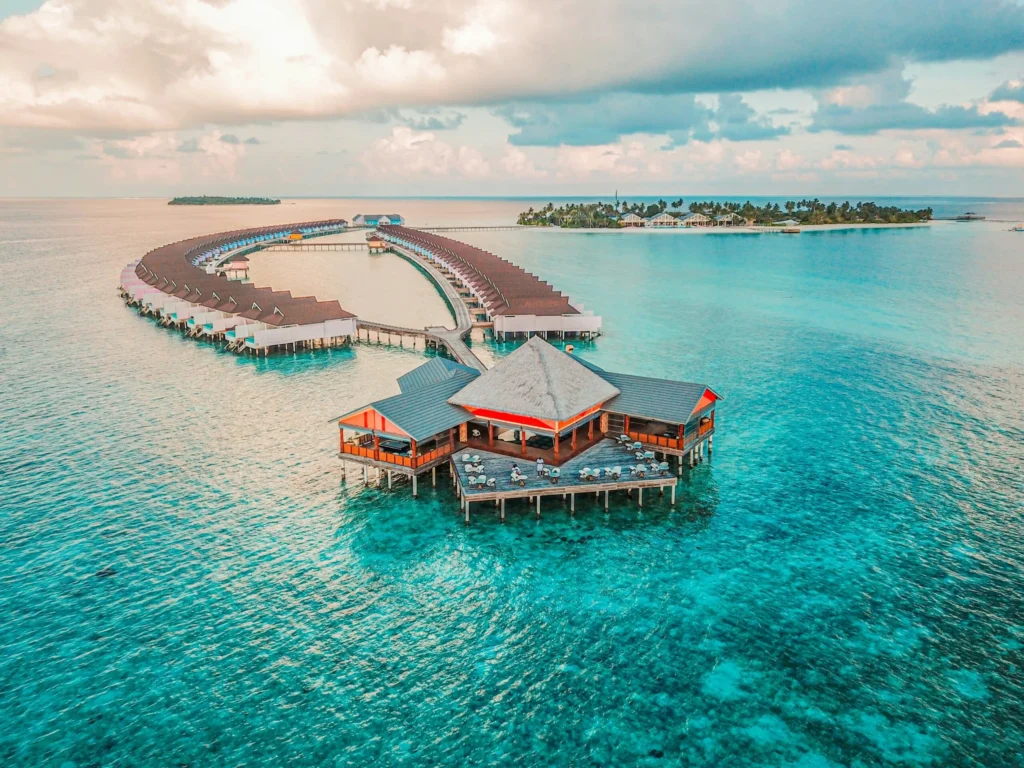
Authentic local atolls: Guesthouses on inhabited islands welcome you without high-season rush.
Better marine encounters: Whale sharks and manta rays gather in Hanifaru Bay from May to November.
Sunny mornings guaranteed: Tropical showers pass quickly, leaving you hours of golden sunshine.
Shoulder Season
Your Smartest Windows
April & November
October (first half)
Avoid: Christmas through New Year (Dec 22 – Jan 5) and Easter week (March/April variable – resort prices double)
What the Sky Does
Daytime 28°C–31°C (82°F–88°F); water 27°C–29°C (81°F–84°F)
April: calm seas, low humidity, and spectacular sunset colours
November: brief afternoon showers (1-2 hours) followed by bright sun
October: mix of sun and short tropical downpours, often overnight
How Empty It Feels
35–45% fewer tourists than peak season (December–February)
Malé: ferry terminals and local markets feel relaxed, no long queues
Resorts: beach chairs always available, restaurant reservations easy
Sandbars: often shared with only 2-3 other couples instead of 20
What You’ll Save
40–50% on resort villas and seaplane transfers compared to December
Domestic flights between atolls: up to 30% cheaper
No “peak season minimum stay” requirements (often 5-7 nights waived)
Spa treatments and overwater dining: 20-35% off with resort promotions
The Secret Perk
Bioluminescent phytoplankton lights up shores on calm April nights
Manta ray snorkelling season peaks in April and November
Local Eid celebrations (date varies) with traditional boduberu drumming
Soft golden light for photography – no harsh midday glare
Resort staff have more time to chat about Maldivian culture
The Tiny Trade-Off
A few island cafes or small shops in local villages may close for afternoon prayer
1 in 4 days sees a short afternoon shower (pack a light rain jacket)
Speedboat schedules between atolls slightly reduced (still daily)
Easter week sees European families – book April early
Smart Traveler Tip
Target the last two weeks of April or first two of November for the best balance of calm seas, lower prices, and wildlife action. Book October only if you don’t mind the occasional evening downpour.
Deep Off-Season
Your Smartest Windows
May – October (excluding Easter week and early November)
Avoid: Easter week (March/April variable – some resorts block deep discounts for 10 days)
What the Sky Does
Daytime 27°C–30°C (81°F–86°F); water 26°C–28°C (79°F–82°F)
Southwest monsoon (May–October): stronger winds and rougher eastern channels
June and July: highest rainfall (about 200mm/8in monthly, mostly overnight)
August and September: sunny mornings, rainy afternoons, then clear evenings
How Empty It Feels
60–70% fewer tourists than peak season – resorts at 30-40% capacity
Male’s fish market and Friday Mosque area feel genuinely local, no crowds
Indoor exhibits at the National Museum are nearly private
Local island guesthouses: you’ll dine with families, not tourists
What You’ll Save
50–70% off peak season rates – overwater villas from $250/night instead of $800
Flights from Dubai, Europe, or Asia: often 40-50% cheaper than December
“Buy one, get one free” resort offers and complimentary half-board upgrades
Public ferries between atolls: same $3–$6 price, never sold out
The Secret Perk
Surf season peak (June–August) with world-class breaks like Pasta Point
Local Bodu Beru drumming nights organised weekly, not just for show
Fishing trips with Maldivian captains – they have more time to teach traditional handline methods
Tuna harvest season (July–September) – sample fresh mas huni like a local
Genuine conversations with resort staff who aren’t rushing through 30 check-ins daily
The Tiny Trade-Off
Eastern-facing beaches have rougher water and seaweed wash-ups (west side remains calm)
Nightlife at resort bars: some close earlier (midnight instead of 3am)
One or two small restaurants on local islands may close for Ramadan (dates vary)
Daylight from 6:30am to 6pm year-round – no loss, but overcast days mean no dramatic sunsets
Smart Traveler Tip
June and July are the quietest, wettest, and cheapest – perfect if you’re a surfer or don’t mind afternoon rain. Pack a 3mm shorty wetsuit (wind chill on boats) and a packable poncho. For the mildest deep off-season, choose September: fewer storms, more sunshine.
Find Off-Peak Flights
Uncrowded Experiences & Tours
Skip the lines and experience iconic landmarks at your own pace. Discover curated local tours and cultural activities designed to show you the authentic side of the destination without the peak-season rush.
FAQs
Essential Trip Information
Visa and Entry Requirements
All nationalities receive a 30-day visa on arrival, free of charge.
Passport must be valid for at least 6 months from the date of entry.
Travelers must show proof of onward travel, confirmed hotel booking, and sufficient funds (at least US$100 + US$50/day).
Full entry guidelines and updates are available at the official Maldives Immigration site.
Currency
The local currency is the Maldivian Rufiyaa (MVR), but US Dollars (US$) are widely accepted in resorts, guesthouses, and shops.
Best Ways to Handle Currency:
Before Your Trip: Exchange a small amount to MVR; most expenses can be paid in US$.
During Your Trip: Credit/debit cards (Visa, Mastercard) are accepted at resorts, but carry US$50–100 in small bills for local islands or tips.
What to Avoid: ATMs may charge high fees and may not be available on remote islands.
Language
Dhivehi is the official language.
English is widely spoken in resorts and by younger locals.
Helpful phrases:
- “Shukuriyaa” (Thank you)
- “Bodu mas” (Big fish) – useful if you’re fishing or diving!
Safety & Security
The Maldives is generally very safe for travelers.
Petty crime is rare, but safeguard valuables on local islands.
Avoid swimming alone on remote beaches.
Emergency number: 119
Health & Insurance
No vaccinations required unless arriving from a yellow fever zone.
Tap water is not safe to drink—bottled or filtered water only.
Travel insurance is recommended, especially for diving/snorkeling.
Basic medical care is available in Malé; serious cases may require evacuation.
Transportation
Speedboats and ferries connect local islands and resorts near Malé.
Seaplanes are common for distant resorts.
Walking and bicycles are the main modes of travel on small islands.
No car rentals; transport is usually arranged through accommodation.
Price Level
The Maldives can range from ultra-luxury to budget-friendly, depending on how and where you stay.
Accommodation
Budget: Guesthouses on local islands (US$40–80/night)
Mid-range: Boutique hotels and some 3-star resorts (US$120–250/night)
Luxury: Overwater villas and 5-star resorts (US$500–1,500+/night)
Food
Local cafes (“hotaa”) on local islands: US$5–10/meal
Resort dining: US$40–100+/person
Alcohol is only available on resort islands and liveaboard boats, with cocktails often US$15–25
Transport
Airport speedboat transfers: US$25–150 (one-way)
Seaplane transfers: US$200–500 (round-trip)
Public ferries: US$2–5, but routes are limited
Money-Saving Tips
Stay on local islands (like Maafushi or Thulusdhoo) for affordable guesthouses and food
Book half-board or all-inclusive packages to avoid resort food markups
Use public ferries where available instead of private transfers
Planning Your Trip
Local Customs And Etiquette
Modesty on local islands: Swimwear only on designated “bikini beaches.” Dress modestly elsewhere—shoulders and knees covered.
Tipping: 10% service charge often included; small tips appreciated (US$5–10/day for staff, US$1–2 for porters).
Religious norms: Maldives is a Muslim country. Public alcohol consumption is prohibited on local islands.
Alcohol: Only available at resorts and liveaboards, not on local inhabited islands.
Cultural respect: Fridays are holy days; services may be limited. Avoid public affection.
Budgeting For Your Trip
Accommodation:
- Guesthouses: US$50–120, mid-range resorts: US$200–400, luxury: US$700–2,000+ per night.
Food:
- Local cafés (“hotaa”): US$5–10/meal.
- Resort meals: US$50–100/person. Fine dining: US$150+.
Transport:
- Speedboat: US$50–200, seaplane: US$250–500, ferries: US$2–5.
Activities:
- Diving/snorkeling trips: US$50–150.
- Spa treatments: US$100–250.
- Excursions (sunset cruises, sandbank picnics): US$60–200.
Daily Budget:
Budget: US$80–120 (guesthouses, ferries, local meals).
Mid-range: US$250–500 (resorts, transfers, activities).
Luxury: US$700+ (5-star resorts, seaplanes, gourmet dining).
Internet & Mobile
Free Wi-Fi:
- Common in resorts, guesthouses, and some cafés. May be slow on outer islands.
SIM Cards:
- Ooredoo or Dhiraagu booths at Malé Airport.
- Prepaid plans: ~US$15–30 for 5–15GB data. Valid for 7–30 days.
eSIMs:
- Available from Airalo, Holafly for easy setup before arrival.
Travel Insurance
Recommended for:
- Medical coverage, especially for emergency evacuations.
- Trip cancellations/delays, especially during rainy season.
- Diving & water sports: Confirm your plan covers these.
Healthcare:
- Quality care available in Malé, but limited elsewhere. Emergency evacuations can be costly.
Accomodation Options
Whether you’re splurging on overwater villas or keeping things simple on a local island, there’s something for every traveler.
Luxury:
- Overwater villas: Soneva Fushi, Baros Maldives, COMO Maalifushi.
- Private islands: Cheval Blanc Randheli, The St. Regis Maldives Vommuli.
Mid-range:
- Boutique resorts: Reethi Beach Resort, Kuramathi Maldives.
- Eco-stays: Gili Lankanfushi (focus on sustainability).
Budget:
- Guesthouses on local islands: Maafushi, Thulusdhoo, Dhigurah (~US$50–120/night).
- Great for travelers wanting authentic cultural interaction.
Unique Stays:
- Underwater suites: Conrad Maldives Rangali Island (US$2,000+/night).
- Floating villas: Available in select high-end resorts.
- Tip: Book early—resorts often fill up during peak season (Dec–Mar), and seaplane slots are limited.
Getting Around
The Maldives is a nation of islands, so inter-island transport is a key part of travel planning.
Speedboats:
- Common for resort transfers from Malé (US$50–200/person, depending on distance).
- Shared or private charters available—check with your hotel.
Seaplanes:
- Scenic and fast (20–60 minutes); ideal for remote luxury resorts.
- Costs: ~US$250–500 round-trip/person. Book through your resort.
Domestic Flights:
- Available between Malé and outer atolls (Gan, Kudahuvadhoo). Fares ~US$100–250.
- Connects to speedboat transfers for final legs.
Local Ferries:
- Budget-friendly (US$2–5) but limited schedules and slow. Ideal for backpackers staying on local islands.
- Not all routes run daily; plan ahead.
Walking & Bikes:
- On inhabited islands and resorts, walking and cycling are common.
Bold Recommendation: Use seaplanes or speedboats for resort access; ferries suit slower, budget-friendly island-hopping.